
Why it matters
The producer
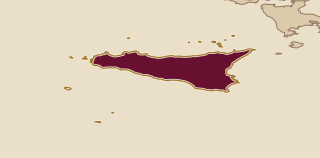
Donnafugata is not a single estate. It is one family's argument that Sicily is plural, and that argument has been made in vineyards across five distinct territories since 1983. The Rallo family planted at Contessa Entellina in the west, crossed to the volcanic island of Pantelleria in 1989, and has since added Vittoria and Etna to a holding that now covers 459 hectares.
Siblings Antonio and José Rallo run the business today. Their parents, Giacomo and Gabriella Anca Rallo, built it from a single inherited property and a decision to walk away from fortified wine. That decision is still visible in every bottle: premium Sicilian table wines and a Pantelleria passito made from Zibibbo.
Place and vineyards
Where the wines begin
Contessa Entellina sits in western Sicily, inland and elevated, with 340 hectares of vines between 200 and 500 metres above sea level. The summers are sunny and wind-cooled, with pronounced temperature swings between day and night. Those swings slow ripening and hold acidity in the fruit, which matters for a red wine built to age. The terrain is hilly, the soils are clay-loam, and the training systems, vertical shoot positioning with Guyot and spurred-cordon pruning at 4,500 to 6,000 plants per hectare, reflect a careful decision about how much fruit each vine should carry.
Vittoria, in Sicily's southeast, holds the island's only DOCG, Cerasuolo di Vittoria, a blend of Frappato and Nero d'Avola. Etna, on the northeastern slope of the volcano, produces wines with volcanic minerality and high natural acidity. Donnafugata has a presence in both zones, though those holdings are not broken out separately from the 459-hectare total.
In the cellar
Vineyards and cellar
At Contessa Entellina, vertical shoot positioning keeps the canopy open to Sicilian summer light and allows the wind off the hills to move through the vines, reducing disease pressure without chemical intervention. Guyot and spurred-cordon pruning at controlled density limits yield and concentrates flavour in each bunch. The elevation difference across the 340-hectare holding means the team can choose harvest windows by parcel rather than picking everything at once.
On Pantelleria, the alberello method shapes the entire approach. Zibibbo vines grow as low bush vines, head-trained without wires, planted in shallow hollows called conche that shelter them from the wind. The terraces are separated by dry volcanic-stone walls built and maintained by hand. Nothing about this vineyard is mechanised. After harvest, the grapes are laid on mats in the sun to dehydrate before pressing, concentrating sugar, glycerol and dried-fruit character before fermentation begins.
Wines to know
The range in view
Donnafugata's range is organised around its five territories, with two wines at the top of the hierarchy that the producer groups as Iconic Wines: Mille e una Notte from Contessa Entellina and Ben Ryé from Pantelleria.
Mille e una Notte is a red blend led by Nero d'Avola with small percentages of Syrah and Petit Verdot. Eighteen months in French barriques and small oak casks, followed by further ageing in bottle, builds a wine with dark cherry and black plum fruit, firm tannins, oak-derived spice, and a persistent finish. The elevation at Contessa Entellina preserves acidity that keeps the fruit from turning heavy.
A useful way in
A bottle to begin with
Ben Ryé is the bottle to start with. One grape, one island, one method: Zibibbo grown on volcanic terraces, dried in the sun, pressed and fermented into a Passito di Pantelleria DOC. Nothing else in the range comes from the same place or works the same way. The wine is amber-gold, sweet but not cloying, with dried apricot, saffron, candied citrus and a saline mineral edge from the Pantelleria soils. The acidity from Zibibbo keeps the sweetness in check. Serve it slightly chilled with aged Sicilian cheeses, almond pastries or alone at the end of a meal. It holds in the glass longer than most dessert wines and ages well in bottle.