
Why it matters
The producer
Fattoria Mani di Luna is an estate of 35 hectares in Torgiano, Umbria, formed by three friends, Simone, Rocco and Alessandro. The named wines divide into Ametistas, the Grechetto white, and the Sangiovese reds Sanjolais and La Cupa. Vineyard work is manual, and indigenous yeasts guide fermentation in the cellar.
The Lungarotti family passed the land to Maria Lungarotti's son, Mario Cascianelli, in the 1970s. Simone, Rocco and Alessandro later set out to revive the estate through organic and biodynamic methods. The vineyards had been managed organically since 2008; biodynamic management began in 2012, when the three friends formally became a winery. The estate now makes Ametistas from Grechetto and Sanjolais and La Cupa from Sangiovese.
Place and vineyards
Where the wines begin
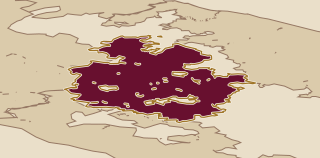
Two landscapes meet inside Fattoria Mani di Luna's Torgiano holding. One area lies near the confluence of the Chiascio and Tiber rivers, while the other is in the hills. The estate has two distinct vineyard settings.
Torgiano's ground here is sandy and full of minerals, with sediment left by ancient Lake Tiberinum. The hill land sits between 200 and 400 metres above sea level. The estate's Grechetto and Sangiovese wines are made within this physical setting.
In the cellar
Vineyards and cellar
Pruning and every crop operation are performed manually. At harvest, grapes are picked by hand into 15 kilogram crates and carefully sorted in the vineyard. Most grapes are destemmed by hand before being crushed by foot. Manual destemming is softer than machine work, and foot crushing encourages spontaneous fermentation.
The cellar uses indigenous yeasts from the grape skins through a pied de cuve, a starter that helps guide fermentation. All the wines spend the winter on their own fine lees. Fine lees are spent yeast cells; weekly bâtonnage keeps them in suspension, increasing stability and richness.
Wines to know
The range in view
The three named wines divide by colour and grape. Ametistas is the white, made from Grechetto and using both whole cluster pressing and skin maceration before fine lees ageing. Sanjolais and La Cupa are the reds, both 100% Sangiovese. Sanjolais occupies the delicate, fresh side of the red range, while La Cupa is the more intense red. The bottles place one white wine beside two single grape reds.
Ametistas opens with candied orange preserve, mango and passion fruit, followed by dried flowers, ginger, sage, honey and beeswax. The palate is mineral, with a lingering finish and capacity for long ageing.