
Why it matters
The producer
Carpano did not inherit vermouth. It made it. In 1786, Antonio Benedetto Carpano blended Muscat wine with wormwood, saffron, vanilla, and a combination of herbs and spices at his shop near the Palazzo Reale in Turin, and called the result vermouth. There was no category before him. There was no name for what he was making. He created both.
The Carpano name passed through factory production from 1820, expanded again in 1898, and eventually came under the full ownership of Fratelli Branca Distillerie, a Milan-based spirits group, in 2001. The range today carries five named expressions, from the premium Antica Formula to the lighter Bianco and Dry, with Punt e Mes occupying a distinct bitter-forward position between them.
Place and vineyards
Where the wines begin
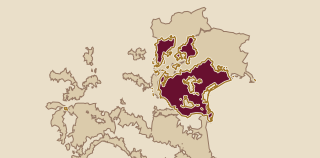
Vermouth is a Piedmontese invention, and Turin is where it started. The city sits at the foot of the Alps, surrounded by the vineyards of Barolo, Barbaresco, Asti, and Moscato d'Asti. Muscat-based wines from the surrounding hills were the original base material for Carpano's formula.
Turin matters here not as an appellation but as a production culture. Eighteenth-century Turin was a court city, densely connected to French and Italian culinary traditions, with a sophisticated trade in spices, botanicals, and liqueurs. Carpano's shop near the Palazzo Reale sat inside that world. The drink that came out of it reflected the city: complex, layered, built from a combination of botanical sources rather than a single grape or terroir address.
In the cellar
Vineyards and cellar
Carpano does not farm vineyards. The production process begins with wine, infuses it with botanical ingredients, fortifies it to a stable alcohol level, and bottles it as vermouth. The botanical infusion is where the character of each expression is decided. Wormwood provides the foundational bitterness that defines the vermouth category. Saffron and vanilla add depth and sweetness in Antica Formula. The combination of cardamom, honey, and cinnamon in Carpano Rosso pushes that expression toward a warmer, spiced register. Carpano Bianco uses bitter orange peel, mace, and cinnamon to build its citrus-forward profile. The full botanical formula beyond these confirmed ingredients is not publicly disclosed.
Fortification raises the alcohol content enough to preserve the botanicals and stabilise the drink for ageing and service. Vermouth can be served immediately or rested, but the production details for each Carpano expression, including maceration times and ageing protocols, are not published.
Wines to know
The range in view
The five Carpano expressions move across a clear spectrum from richest and most bitter to lightest and driest.
Carpano Antica Formula is the premium rosso, dark reddy-brown amber in colour, and the most botanically dense of the range. The nose carries prunes, dates, raisins, candied cherries, vanilla, tobacco leaf, spices, and orange zest. On the palate it is bitter-sweet and very slightly syrupy, with dried fruit and Christmas spices and a quality that reads like a booze-soaked fruitcake. Cinnamon lifts the fruity finish. This is the thickest and most layered of the range, built to be sipped neat or to anchor a cocktail with complexity.
A useful way in
A bottle to begin with
Carpano Antica Formula is the first bottle. It is the expression that carries the founding claim and the one that shows what the Carpano house does at its most concentrated. Dark reddy-brown amber in a tall, distinctive bottle, it opens with an aromatic depth that few vermouths match: prunes, candied cherries, vanilla, tobacco, and orange zest all present before the palate takes over. The mouthfeel is slightly syrupy without being heavy, the dried fruit and Christmas spice building toward a cinnamon finish that is long and warm.