
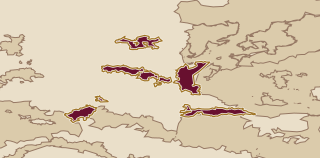
Why it matters
The producer
Frecciarossa sits on the iron-rich hills of Casteggio, in the Oltrepò Pavese zone of southwestern Lombardy, a large appellation that curves south of the Po River into the foothills of the Apennines. Mario Odero bought the estate in 1919, reorganised the vineyards and the winemaking buildings, and had the first bottles carrying the Frecciarossa name on the market somewhere between 1921 and 1930. Four generations later, the estate spans 34 hectares, and the fourth-generation owners, Margherita and Valeria Radici Odero, decided in 2014 to convert the entire estate to organic viticulture. Certification arrived with the 2017 harvest.
The wines that come out of Casteggio are grounded in the particular traditions of Oltrepò Pavese: Pinot Nero grown for white-wine production, traditional-method sparkling from the same grape, and the native red variety Uva Rara. Frecciarossa makes one of each.
Place and vineyards
Where the wines begin
Oltrepò Pavese is the part of Lombardy that most visitors to Milan never think about. It lies south of the Po, across the river from Pavia, climbing into the Apennine foothills in a series of ridges and clay-rich valleys. The DOC is large and covers a wide range of styles, but Pinot Nero has been planted here since at least the 1850s, used both for red wines and, in a regional practice that runs counter to what most people expect of a red grape, for white-wine vinification.
Casteggio sits toward the heart of this zone. The hills around it carry iron-rich soils that colour the landscape visibly, the same red-ochre earth that gave the estate its name. Elevation and the Apennine influence bring cooler nights than the Po plain below, helping the grapes hold acidity through ripening.
In the cellar
Vineyards and cellar
Organic farming on the estate has been certified since the 2017 harvest. In the vineyard, organic farming has been certified since the 2017 harvest, and a dependence on the natural mineral richness of the soils carries the vines.
In the cellar, each wine is handled differently. Sillery Pinot Nero Bianco begins with gentle pressing of the red-skinned Pinot Nero grapes, timed precisely to prevent colour extraction before fermentation begins. The juice then spends six months in stainless steel. The Rosé Extra Brut follows the traditional method: secondary fermentation takes place in bottle at 16°C, and the wine then ages on the lees in bottle for more than 18 months before disgorgement. That slow lees contact is what gives the wine its layered aromatic character and mineral depth. Uva Rara, the native red, is vinified as a straightforward red, with the variety's natural tannin and spice character allowed to come through clearly.
Wines to know
The range in view
Frecciarossa makes three distinct wines, each covering a different facet of the Oltrepò Pavese tradition.
Sillery Pinot Nero Bianco is the estate's white wine from red grapes. Pinot Nero from lime and clay-rich parcels is pressed slowly and gently to keep the juice colourless, then fermented and aged in stainless steel for six months. The result carries white flowers and citrus on the nose alongside balsamic overtones and an unexpected depth for a white wine. On the palate it is medium-bodied with stone fruit, melon, and pear, and it finishes clean and supple.
A useful way in
A bottle to begin with
Start with Sillery Pinot Nero Bianco. It is made from Pinot Nero grapes harvested from lime and clay-rich parcels above Casteggio, pressed slowly to stay white, then aged six months in stainless steel with no oak influence and no residual colour. The wine sits somewhere between a Burgundian white and a northern Italian aromatic white, without quite being either: white flowers and citrus on the nose, balsamic overtones that signal red-grape depth, and a palate of stone fruit, melon, and pear with enough acidity to keep everything lively. It is the wine that most clearly explains what Oltrepò Pavese does with Pinot Nero, and what Frecciarossa does with its organic parcels.