
Why it matters
The producer
Giacomo Conterno farms Nebbiolo in Serralunga d'Alba, one of the five core communes of Barolo in the Langhe hills of Piemonte. The estate's three single-vineyard Barolo wines and its Riserva Monfortino share a common cellar logic: extended maceration on the skins and long ageing in large Slavonian oak casks, called botti. Roberto Conterno has led the estate since his father Giovanni's death, and he has not altered the central method.
The house was not born with this logic. Giovanni Conterno opened a tavern and wine operation in 1908, and wine left the estate in barrel rather than bottle. After the First World War, his son Giacomo decided differently. He began bottling under the family name, and in 1924 released the first Monfortino. That bottle announced a position: aged, estate-bottled Barolo from a single producer, at a time when most of the region's wine still moved in bulk.
Place and vineyards
Where the wines begin
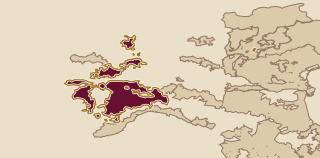
Serralunga d'Alba sits at the southern end of the Barolo zone. The commune's soils are compact and mineral-rich, with a high proportion of clay and limestone that drains slowly and stresses the vine through summer. Nebbiolo grown here tends to produce wine with firmer tannins and slower aromatic development than from the lighter soils of La Morra or Barolo village to the northwest.
The Serralunga address shows in the glass as austerity first and complexity later. Wines from this commune are not built for early drinking. The tannins are hard in youth, the aromatics are slow to open, and the acidity is firm. What the commune offers in return is longevity and a particular iron-and-rose-petal character that does not come from elsewhere in the Langhe.
In the cellar
Vineyards and cellar
All three Barolo wines undergo extended maceration on the skins in large open fermenters before being moved to botti. The botti are large Slavonian oak casks, which give the wine gentle oxygen exchange without imparting the vanilla or toast flavours of smaller barrique. The wood contact here is about stability and slow development, not flavour addition.
Cascina Francia macerates for three to four weeks at temperatures held below 30 degrees Celsius. Temperature control at this level protects the fruit aromatics while extracting tannin and colour over a long maceration period. After fermentation, the wine ages for four years in botti before bottling.
Wines to know
The range in view
The range is four wines, all Nebbiolo, all Barolo.
Barolo Cascina Francia is the estate's most produced wine and the clearest expression of the Conterno house style at accessible age. Nebbiolo from the Francia vineyard, macerated three to four weeks at controlled temperatures, aged four years in large Slavonian oak botti. The aromatics are intensely layered: rose petals, tar, licorice, spices, pomegranate, and iron with rich red fruit underneath. The tannins are firm and the acidity is high, which is characteristic of Serralunga Nebbiolo, but the wine opens earlier than Monfortino and can be drunk with patience at around a decade from harvest.