
Why it matters
The producer
J.Neus sits in Ingelheim am Rhein, on the western edge of Rheinhessen, in a town with a red wine tradition that predates the region's modern Chardonnay revival. The estate has been farming fossilized shell limestone soils since 1881, and everything about how it presents itself today traces back to that founding year: the range names, the cellar, and a Pinot Noir clone that no other producer in the region grows.
The wines are classified under the VDP framework. The entry level is Gutswein; above that sits VDP.Erste Lage, the premier cru tier, drawn from the Schlossberg site. Twelve hectares of vines, split between Chardonnay and Pinot Noir, produce around 80,000 bottles a year from a cellar that is, by any physical measure, one of the most imposing in Rheinhessen.
Place and vineyards
Where the wines begin
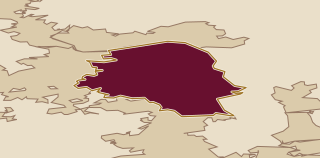
Ingelheim am Rhein is a town on the Rhine's western bank, separated from the main mass of Rheinhessen's interior by gentle hills. Its vineyards fall within a subzone called the Horn, where the dominant soil is Muschelkalk: layers of compacted fossilized shells deposited when a shallow Triassic sea covered this part of central Europe. That geology shapes both the mineral character of the wines and, directly, the name of the estate's entry-level Chardonnay.
Muschelkalk soils drain quickly, hold warmth at depth, and contribute a saline, chalky mineral quality that distinguishes Ingelheim whites from the sandier and loamier vineyards that dominate much of northern Rheinhessen. For Pinot Noir, the limestone base gives the skins a firmer tannin platform and keeps alcohol from running ahead of the fruit during warm growing seasons. Ingelheim's red wine history is long enough that its local growers developed their own rootstock selections before the modern nursery industry consolidated Germany's genetic material into regional stocks.
In the cellar
Vineyards and cellar
Vines in the Horn subzone are trained to manage vigour on the well-drained Muschelkalk. The shell limestone's quick drainage and alkaline chemistry naturally limits yield and keeps acidity high through the growing season, which is useful for Chardonnay in a warming climate: the wines hold freshness without needing early harvest.
In the cellar, whites and reds both rest a minimum twelve months in large wooden barrels before release. The barrels are old, which means they contribute almost no detectable oak character to the wine. What they do contribute is a slow, controlled exchange of oxygen through the barrel stave, building texture and rounding tannin in the reds, and adding weight to the mid-palate of the whites without sweetening them.
Wines to know
The range in view
The range is anchored by two Chardonnay expressions and a Pinot Noir line.
The Muschelkalk Chardonnay is the Gutswein, the estate-level wine. It opens with apple at the front, pear and peach pulling alongside. The wine is dry and the colour is pale straw yellow with a faint greenish tinge in the glass. It is approachable in its first year, built for the fruit rather than the mineral register, and its name is a direct translation of the soil beneath the vines.
A useful way in
A bottle to begin with
The Muschelkalk Chardonnay is the right first bottle. It is dry Chardonnay grown on the same shell limestone, named directly after that soil, and priced as the entry-level expression. Apple leads the nose, pear and peach following, with a chalky mineral note emerging on the finish as the fruit clears. There is no oak character to navigate and no residual sweetness to adjust for. What the wine communicates is the Muschelkalk geology itself: clean acidity, fresh fruit, a limestone finish. Start here, then move to the Schlossberg to see what the premier cru site adds.