
Why it matters
The producer
Kanonkop farms the eastern slopes of the Simonsberg mountain in Stellenbosch and has built its whole argument around red wine. Two grapes carry the estate: Pinotage, South Africa's own cross of Pinot Noir and Cinsaut, and a Bordeaux-style blend named Paul Sauer after the politician who shaped the farm from 1929. Those two bottles account for most of what Kanonkop is known for, and they do very different things in the glass.
The brothers Johann and Paul Krige own the estate today, the third generation to farm it. The range runs across two tiers: the Estate Range, which takes in Paul Sauer, Pinotage (including the Black Label from old bush vines), and Cabernet Sauvignon; and the Kadette range, which covers a second-label Pinotage and a Cape Blend. Everything produced at Kanonkop is red.
Place and vineyards
Where the wines begin
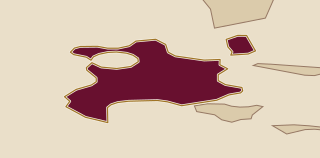
The farm sits on the R44 road under the Simonsberg, which separates the Stellenbosch and Franschhoek valleys. Elevation and aspect matter here: the slopes face south and east, which extends the growing season and keeps fruit from ripening too fast in the Western Cape summer. Stellenbosch as an appellation covers a broad area, but the Simonsberg pocket is one of its cooler, slower zones.
The name Kanonkop is Afrikaans for cannon hillock. A cannon stood on the butte above the farm in the 18th and 19th centuries, used to signal the arrival of ships in Table Bay. That geographical marker sits above the vineyard today exactly as it did then, which tells you something about how long this particular slope has been observed and used.
In the cellar
Vineyards and cellar
The fermentation cellar was built in 1942. Its open concrete tanks are still the primary fermentation vessel for Pinotage. Concrete is not stainless steel: it breathes slightly, retains temperature differently, and adds no oak character of its own. For Pinotage specifically, the open-top format allows cap management by hand. At Kanonkop, the cap is punched down manually every two hours for approximately three days during active fermentation. That rhythm extracts colour, flavour, and tannin steadily without the harder extraction that longer or more aggressive pump-overs can produce.
After fermentation, the Estate Range wines move to French oak barrels. Paul Sauer ages for 24 months in new French oak. The oak contributes cedar, spice, and tannin integration over that period, and the wine's fruit weight and acidity need to carry that weight without being overpowered.
Wines to know
The range in view
The Estate Range covers three bottles.
Paul Sauer is a Bordeaux-style blend of Cabernet Sauvignon, Merlot, and Cabernet Franc, first made in 1981 and aged 24 months in new French oak. It is Kanonkop's most structured wine, built for cellaring. The tannins are described as deceptively taut, the acidity fresh and glassy, and the aromatics run through incense, graphite, and black currant with an unusual saline, maritime thread that keeps the nose from closing in.
A useful way in
A bottle to begin with
Start with Paul Sauer. It is the wine named for the man who planted these vineyards, the estate's most documented bottling, and the one that shows what Simonsberg granite and 24 months in new French oak together produce. The 2021 vintage is a good place to enter: the incense and violet aromatics are well-defined, the oyster shell minerality is unusual and worth sitting with, and the tannins are already approachable, with cellaring potential to 2050+. One bottle tells you what the cellar can do with a very good vintage on a very specific slope.