
Why it matters
The producer
La Giaretta is a family estate in Valgatara, a hill village at the heart of the classic Valpolicella zone in the Veneto. Bruno Vaona built the business from the late 1950s. The family has continued since, farming ten hectares of estate-owned vineyards and bottling exclusively from their own fruit.
The estate works in a part of Italy where Amarone shapes everything: how grapes are grown, how they are dried, how long they wait in wood, and what reaches the table. La Giaretta's range runs from a fresh Valpolicella Classico through Ripasso to two Amarone expressions, a red Recioto dessert wine, and two single-variety IGT wines that sit outside the classic Valpolicella appellation altogether.
Place and vineyards
Where the wines begin
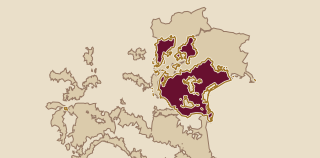
Valpolicella Classico is the western, hillside section of the Valpolicella production zone, the part that existed before the appellation expanded onto the plains. Valgatara sits in the commune of Marano di Valpolicella, which holds six of La Giaretta's ten hectares. The remaining four are split between Negrar to the east and San Pietro in Cariano to the south, two communes that add different fruit characters to the sourcing pool.
All the vineyards sit at around 200 metres elevation. At that height, nights cool sharply after warm afternoons, slowing ripening and preserving the acidity that keeps Valpolicella from feeling heavy. The label Classico on both the Valpolicella and Amarone signals hillside origin, a distinction that matters in a zone where valley-floor fruit is also legally entitled to call itself Valpolicella.
In the cellar
Vineyards and cellar
Grapes for Ripasso and Amarone are hand-harvested and transferred to the winery's drying facility, where computer-controlled ventilation governs airflow during the appassimento process. Drying concentrates sugar, glycerol, and dried-fruit character while reducing juice volume. For the Amarone Classico, grapes rest on wooden racks until January before pressing, giving a drying window of several months.
In the cellar, La Giaretta uses steel tanks and older wooden casks for most of the range. Steel preserves fruit and acidity. Older wood adds micro-oxygenation without imparting strong flavour. The Amarone Classico rests at least two years in wood before bottle refinement. New barriques are reserved entirely for the top Amarone, I Quadretti, and then cycle down through the range as they lose the intensity of new oak. A barrel that aged I Quadretti becomes a vessel for other wines the following vintage, carrying only trace character rather than dominant wood.
Wines to know
The range in view
The range builds upward from Valpolicella to Amarone in a sequence that reflects how much of the appassimento process each wine uses.
Valpolicella DOC Classico Superiore is the entry-level red: Corvina, Corvinone, and Rondinella from the classic zone, fresh and relatively light in body, with the cherry and herb character the blend gives before drying enters the picture.
A useful way in
A bottle to begin with
Amarone della Valpolicella DOCG Classico is the right first bottle. It is what the estate builds toward: ten hectares of Corvina, Corvinone, and Rondinella, hand-picked and dried on wooden racks in a ventilated facility until January, then pressed and aged at least two years in older wooden casks. The wine is full-bodied, with dried-cherry and dark-plum fruit, glycerol-rich texture from the months of concentration, firm tannin, and a long finish with earth and dried herbs. The acidity keeps it from feeling inert. It is not a wine to open young. Four or five years from the vintage is a reasonable starting point, and good vintages hold comfortably beyond a decade.