
Why it matters
The producer
La Spinetta takes its name from the Piedmontese dialect word for the hilltop where the Rivetti family planted their first vines. Giuseppe 'Pin' Rivetti founded the estate at Castagnole delle Lanze in 1977, in the Asti zone of southern Piedmont. His son Giorgio, one of three brothers and grandson of Giovanni Rivetti who began the family's connection to wine in the 1890s, now leads the estate as owner and winemaker.
Giorgio Rivetti has accumulated more than 30 Gambero Rosso Tre Bicchieri awards across different bottles, one of the most sustained records of any Italian producer across a single career. The range covers four Piedmontese appellations, a separate 65-hectare Tuscan estate producing Sangiovese under the Casanova della Spinetta label, and since 2011, the historic Contratto house founded in 1867, which Giorgio and his son Andrea now lead into metodo classico sparkling wine and spirits. The through-line is single-vineyard discipline: La Spinetta built its reputation parcel by parcel, from the Bricco Quaglia Moscato to the Nebbiolo crus of Neive and La Morra.
Place and vineyards
Where the wines begin
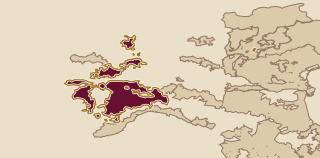
The Piedmont heartland of La Spinetta divides into two geographic zones. The Asti zone, centred on Castagnole delle Lanze, is the home of Moscato d'Asti and Barbera d'Asti. The soils here are sandy and calcareous, giving Moscato Bianco the aromatic lift and clean finish that defines the appellation. Barbera from this zone, grown at altitude on parcels with low natural yields, produces wines with more acidity balance and softer tannin than flatland plantings.
The Tuscan estate between Pisa and Volterra is a separate address. The Casanova della Spinetta label covers Sangiovese wines from this terrain, which sits in the coastal hills south of Pisa, removed from both Chianti Classico and Montalcino.
In the cellar
Vineyards and cellar
The Bricco Quaglia Moscato ferments slowly in temperature-controlled vats over approximately three months. This extended, low-temperature fermentation captures aromatic compounds that a faster ferment at higher temperatures would drive off, giving the wine its layered peach, sage, and honey character alongside a clean, fresh finish. The wine is low in alcohol and lightly sparkling, typical of the Moscato d'Asti appellation, and is not aged in wood.
Barbaresco Bordini ages for a minimum of nine months before release. The wine spends time in oak, consistent with DOCG requirements for Barbaresco, though La Spinetta's cellar approach emphasises preserving the mineral character of calcareous marl sites. The 40-year-old vines in Bordini give concentrated fruit that can carry oak without losing the vineyard's signature grip.
Wines to know
The range in view
The La Spinetta range is built around the single-vineyard idea applied at every price point.
Moscato d'Asti Bricco Quaglia is 100% Moscato Bianco. It is lightly sparkling, low in alcohol (around 5.5%), and shows peach, sage, and delicate honey on the nose. The palate moves through fresh fruit and fine herbs to a clean, mineral finish. This is not a simple sweet wine: the finish is precise, and the aromatic complexity owes as much to fermentation discipline as to the grape.
A useful way in
A bottle to begin with
Start with Barbaresco Bordini. It is 100% Nebbiolo from the named Bordini vineyard in Neive, made from 40-year-old vines on calcareous marl and sand, and aged for a minimum of nine months before release. The wine gives the full Nebbiolo argument in one glass: the dried rose and red cherry on the nose, the firm tannin frame from marl soils, the mineral chalk on the finish, and the way all of it softens slightly because of the sandy fraction in the vineyard. Bordini is not La Spinetta's most expensive bottle, but it is the one that explains what the producer is doing with Nebbiolo and what single-vineyard discipline in the Langhe can produce.