
Why it matters
The producer
Lubanzi uses wild fermentation, minimal intervention and no additives in its cellar approach. The producer places its wines broadly in Swartland, with a range built around a varietal red, a still white and a sparkling rosé.
Trizanne Barnard is the winemaking lead, while Bruce Jack remains a mentor and adviser. Barnard and Jack were the winemaking partners who helped Charlie Brain and Walker Brown bring the brand to life.
Place and vineyards
Where the wines begin
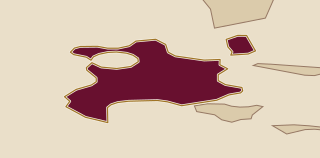
The Western Cape is Lubanzi's South African home. Within that broad setting, the producer presents its wines as coming from Swartland. The Shiraz, Chenin Blanc and sparkling Cinsault rosé use Coastal Region as their regional designation.
The geographic wording therefore works at two scales. Swartland describes Lubanzi's broader positioning, while Coastal Region names the regional classification attached to the wines in this range.
In the cellar
Vineyards and cellar
Lubanzi Shiraz is certified organic by Ecocert, and the producer says no pesticides, herbicides or fungicides are used during growing. The farming claim applies to the Shiraz parcels that supply the wine.
The cellar approach centres on wild fermentation, minimal intervention and no additives. Wild fermentation uses naturally present yeasts rather than a selected commercial culture, while minimal intervention leaves fewer cellar additions between grape and bottle.
Wines to know
The range in view
Lubanzi Shiraz is the 2023 red. Lubanzi Chenin Blanc appears in the 2023 and 2024 vintages as a still white. Lubanzi Sparkling Cinsault Rosé is the non vintage sparkling wine.
The range has three clear forms: a varietal Shiraz, a still Chenin Blanc and a sparkling rosé made from Cinsault. The bottles move from still red to still white to sparkling wine without changing the producer's low intervention cellar approach.
A useful way in
A bottle to begin with
Choose Lubanzi Sparkling Cinsault Rosé. It is the range's non vintage sparkling bottle, made from 35 year old dry farmed Cinsault bush vines. The grapes are gently pressed in whole bunches, fermented with native yeasts and given their sparkle with added carbon dioxide before bottling or canning.