
Why it matters
The producer
Luigi Righetti sits in Valgatara, one of the villages at the heart of the Valpolicella Classico zone. The family has been making wine on these hillsides since 1909, when Angelo Righetti built a local reputation from the limestone slopes above the valley. That reputation is now five generations deep.
The estate runs a clear vertical: Valpolicella Classico at the base, a Ripasso called Campolieti in the middle, the standard Amarone della Valpolicella Classico above it, and at the top, Capitel de' Roari, a single-vineyard Amarone drawn from one named hillside plot. Each step up adds concentration, drying time, and cellar age. The range is built around Corvina, which anchors every red on the list, blended with Rondinella and, in the Campolieti, a small share of Molinara. The estate also grows international varieties, though these appear elsewhere in the portfolio rather than in the core appassimento wines.
Place and vineyards
Where the wines begin
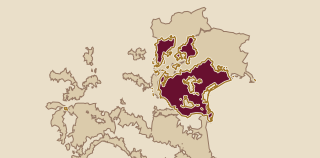
Valpolicella Classico is the original, western zone of the Valpolicella DOC, defined by hillside vineyards rather than the flat valley floor of the broader appellation. The Classico designation matters on the label because it tells you the grapes came from higher, older sites with better drainage and more complex soils. Valgatara falls within this zone, its vineyards climbing limestone slopes that push acidity into the fruit and give the Valpolicella its characteristic lift.
The pergola Veronese, the traditional training system across the zone, runs the vines on high horizontal trellises. This keeps the canopy off the ground, manages air circulation, and produces grapes with naturally lighter colour extraction than low-trained vines. The result for Valpolicella Classico is a lighter-bodied red: not thin, but bright and food-oriented, with red cherry ahead of dark fruit.
In the cellar
Vineyards and cellar
The estate farms organically. No pesticides or fungicides go into the Valpolicella Classico hillside parcels, and sulfur use in the cellar is kept low. The Valpolicella Classico vines are trained on the traditional pergola Veronese, harvested by hand, and taken directly to temperature-controlled stainless-steel vats. The stainless-steel approach keeps primary fruit forward: fermentation at controlled temperatures preserves the red cherry character of Corvina and the light herbal lift that hillside limestone tends to give.
The Campolieti Ripasso takes a different route. Valpolicella wine re-ferments on the pressed skins and lees left over from the Amarone, picking up body, dried-fruit depth, and additional tannin without going through the full three-to-five-month drying of a true Amarone.
Wines to know
The range in view
Four bottles define the range.
Valpolicella Classico is the daily wine, made entirely in stainless steel from pergola-trained Corvina, Rondinella, and Molinara grown on the limestone hillsides. It is pale ruby, light-bodied, and built around fresh red cherry and herbs, with the acidity of hillside limestone keeping it lively. It drinks young and works well at the table.
A useful way in
A bottle to begin with
The Amarone della Valpolicella Classico is the right first bottle here. It is built from 70% Corvina, 20% Rondinella, and 10% other indigenous varieties, dried in shallow wooden crates for three to five months and matured in large Slavonian-oak casks. No single bottle explains what the family has been doing across generations more directly. The appassimento process is the estate's defining commitment: buying this wine means buying the choice to dry grapes through winter, to ferment against a high sugar load until the wine runs completely dry, and to wait for Slavonian oak to integrate tannin over time.