
Why it matters
The producer
Maison Barboulot is a Languedoc range of IGP Pays d'Oc wines whose named red, Cabernet-Syrah, ferments in concrete tanks and ages for a few months with French oak staves. The bottle joins Cabernet and Syrah with ripe red fruit, vanilla, a smooth palate and a dry, slightly grippy finish. The cellar sequence leaves oak beside the fruit, with tart fruit remaining at the close.
Cinsault Rosé gives the range a second colour and a different set of cues: fresh berries, a pleasing floral note and a delightful, refreshing impression. Maison Barboulot is a range of classic French wines from carefully selected terroirs, made with traditional French methods. Its labels use traditional French graphic codes.
Place and vineyards
Where the wines begin
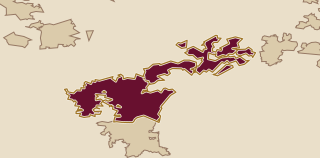
The bottles carry the IGP Pays d'Oc category in the Languedoc, a regional label without a named village or narrower appellation. Cabernet-Syrah and Cinsault Rosé keep grape and colour cues in view, so the label points to regional wine plus bottle style, not a single named parcel.
The vineyards sit at the foothills of the Black Mountains, with Mediterranean sun and cool nights. The red profile holds ripe fruit against tart fruit and slight grip, while the rosé turns to fresh berries, flowers and refreshment. Two styles come from the same vineyard setting.
In the cellar
Vineyards and cellar
Concrete tanks handle Cabernet-Syrah fermentation, followed by a few months with French oak staves. The few months with oak sit behind vanilla in the aroma and mid-palate, while ripe fruit and moderate sweetness keep the middle smooth and fruity. Spice arrives before dry tannins and a slightly grippy finish, where tart fruit remains.
The wider method is traditional French winemaking. No farming regime, harvest practice, vine age, yield or separate Cinsault Rosé ageing plan is established. Cinsault Rosé is described through fresh berries, a floral note and a delightful, refreshing impression; its vessel and ageing are not named.
Wines to know
The range in view
Cabernet-Syrah is the red anchor. It is fruit-forward and smooth, with ripe red fruit, vanilla and faint bubblegum in the aroma, moderate sweetness on the palate, then spice, dry tannin, slight grip and lingering tart fruit at the finish. The 2019 note adds oaky vanilla through the mid-palate and refreshing tart cherry at the close; the 2022 IGP Pays d'Oc listing is a separate vintage, so the 2019 detail stays attached to 2019.
Cinsault Rosé is the named rosé counterpart. Fresh berries and a pleasing floral note lead into a delightful, refreshing impression. No vintage, blend proportion, vessel, ageing period, dosage, sweetness or finish detail is named. The range divides into a red carrying fruit, oak, sweetness and tannin, and a rosé carrying berry and floral freshness.
A useful way in
A bottle to begin with
Choose Cabernet-Syrah first. It brings together the regional IGP Pays d'Oc label, the Cabernet and Syrah cue, concrete fermentation, French oak stave ageing and a vintage tasting record. In 2019, ripe fruit carries oaky vanilla through the middle before tart cherry closes a very smooth, well-balanced palate. Cinsault Rosé offers a separate berry and floral style, but Cabernet-Syrah carries the more complete combination of grape, method and taste detail.