
Why it matters
The producer
Malmö Meadery is Malmö Brewing’s separately marketed mead brand, led by the shared owner Anders Hansson. Its bottles begin with honey rather than fermented grape juice, so flavour is built through additions such as passion fruit, black currant, red grapes and liquorice rather than through vineyard names or grape varieties.
Hansson had been making mead since 2016 before the public release in 2019. The result is a range that moves between fruit-led bottles, darker herbal mead and pyment, the grape-and-honey style that brings wine fruit into a honey-based drink.
Place and vineyards
Where the wines begin
The meadery operates on the third floor of Malmö Brewing’s premises in Malmö; the associated venue is at Bergsgatan 33, 214 22 Malmö. A city brewery setting suits the format: the mead is poured on tap as well as bottled, and carbonation has been an important part of its early session-mead approach.
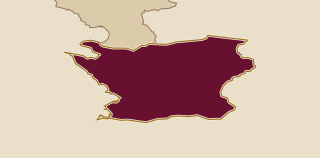
Skåne appears here as the producer’s base rather than as a vineyard appellation. Honey supplies the fermentable foundation, while fruit, berries and grape material determine the colour, aroma, sweetness and acidity of each release.
In the cellar
Vineyards and cellar
There are no vineyards behind Malmö Meadery’s labels. Honey is fermented with fruit, berries and other natural ingredients, so each recipe changes the drink before cellar handling begins: grape fruit creates pyment, while liquorice takes the profile toward darker herbal flavour.
Carbonated session mead at roughly 6% was an early production focus. Carbon dioxide lifts aroma and adds mousse, which can make honey sweetness feel less heavy on the palate. Oak fermentation and ageing are also documented in the wider style profile, offering another route to texture and flavour beyond fruit alone.
Wines to know
The range in view
The range is arranged by ingredient and style rather than by vineyard rank. Passion Fruit and Papaya occupy the bright, tropical end: both place fruit aroma and colour at the centre of the bottle, with honey providing the base beneath it. Black Currant heads toward darker berry fruit and deeper colour.
Red Grape Pyment brings grape fruit into the ferment alongside honey. It is the bottle closest to grape-wine territory, but its structure remains mead-based: fruit and sweetness come from a different starting point than a conventional red or white wine. Licorice Mjöd travels in the opposite direction, using a dark herbal flavour instead of tropical or berry fruit.
A useful way in
A bottle to begin with
Start with Red Grape Pyment. It is the clearest way into Malmö Meadery because it places two familiar worlds in one bottle: grape fruit gives a wine-like aromatic cue, while honey supplies the mead base and a sweeter, rounder texture. Serve it cool and look first for grape and honey, then for how sweetness carries through the palate rather than disappearing into tannin or oak.