
Why it matters
The producer
Before becoming an independent winegrower, Martin Muthenthaler drove a truck for the local cooperative. He now works vineyards spread across numerous plots in the Spitzer Graben. His cellar uses spontaneous fermentation, some skin contact and extended ageing on the lees, the yeast solids left after fermentation.
Across the range, Muthenthaler generally makes dry wines without botrytis. They have naturally moderate alcohol and undergo wild yeast fermentation. Older oak barrels are part of the cellar practice. They give the wines time in wood with less fresh wood flavour than new barrels.
Place and vineyards
Where the wines begin
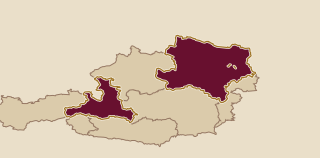
The farm is in Elsarn am Jauerling. The vineyards lie in the Wachau and are distributed among plots in the Spitzer Graben. Wachau appears as the appellation on the named wines. Spitzer Graben narrows the vineyard source to a specific part of the region.
The geographical language stays close to the plots. The wines are connected to Wachau, but the vineyard work takes place across separate named parcels rather than one undivided holding.
In the cellar
Vineyards and cellar
Everything in the vineyard is done by hand, including tillage. Green manure fosters flowering plants and insects among the vines. Muthenthaler does not irrigate. He avoids botrytis affected fruit when it would be used to raise alcohol.
In the cellar, spontaneous fermentation allows ambient yeast to start the ferment. Some wines receive skin contact, and extended lees ageing can add roundness and savoury texture. Older oak barrels bring time in wood with a gentler wood flavour than new oak.
Wines to know
The range in view
Glimmerschiefer 2021 is a Riesling matured in stainless steel for approximately nine months. Ried Schön 2022 is made entirely from Grüner Veltliner, vinified in large oak and aged on its lees for 12 months in 600 litre oak barrels.
Wachau Noricum 2017 sits alongside them as another named Wachau white. The named bottles place tank matured Riesling beside oak raised Grüner Veltliner. Different grapes and vessels give the range its shape.