
Why it matters
The producer
Antoine Ogier entered the wine business in 1859 by purchasing a cooperage and establishing Ogier as a Rhône Valley wine producer. The operation now covers more than 100 hectares under vine and maintains partnerships with regional winegrowers and domaines lasting more than twenty years. Its sourcing policy stays focused on Châteauneuf-du-Pape and the southern appellations.
Edouard Guérin and his teams work through harvest periods that can last over two months. In Châteauneuf-du-Pape, bush-trained Grenache rules out machinery, so harvesting is mainly manual. The winery holds over 8,000 hectolitres in vats, barrels, demi-muids, casks and truncated vats. Guérin selects the vessel and vatting duration by cru and harvest quality.
Place and vineyards
Where the wines begin
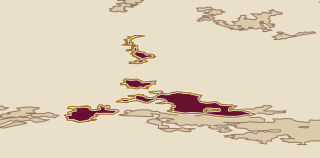
Châteauneuf-du-Pape is Ogier's home village, and the centuries-old winery stands at the centre of the village. The range extends into the southern appellations through Lirac and Gigondas. An appellation name ties a bottle to its defined origin on the label, so these wines carry their own place names within the wider Rhône range.
Wines to know
The range in view
Ogier's red range includes Lirac Le Petit Prince and Gigondas Les Dentelles. Le Petit Prince is the Lirac bottle in the range, while Les Dentelles places Grenache first and adds Syrah.
Les Dentelles is manually harvested, partially destemmed and fermented with 20% whole bunches. Whole bunches leave stems in the vat during fermentation. The wine then spends twelve months in tuns and oak demi-muids, with 10% new oak. Le Petit Prince uses the producer's current blend of Grenache Noir, Syrah and Mourvèdre.