
Why it matters
The producer
Org de Rac began when Nico Bacon, an entrepreneur in South Africa’s fishing industry, founded a wine farm near Piketberg in 2000. Its defining decision was to grow grapes under fully certified organic farming, then turn those grapes into a broad estate range: Sauvignon Blanc, Chenin Blanc, Chardonnay and other whites; Shiraz, Cabernet Sauvignon, Merlot and blends; rosé; and bottle-fermented sparkling wine. The result is not one narrow style, but a set of bottles whose fruit, oak and lees treatment show different parts of the same northern Swartland farm.
Place and vineyards
Where the wines begin
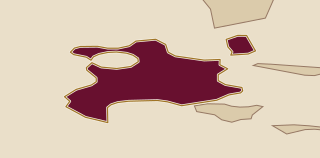
The estate lies near Piketberg, on the northern edge of the Swartland, about 130 kilometres north of Cape Town. Its vineyards face south, with westerly breezes arriving from the Atlantic around 50 kilometres away; the Berg River borders the property and Piketberg mountain stands to its north. Those physical boundaries matter in the vineyard: south-facing rows and moving air can slow heat accumulation, helping preserve acidity in wines such as the dry, herbal Mooi Sauvignon Blanc while allowing the red blend to reach dark-fruit weight.
Before matching varieties to the farm, Org de Rac commissioned work on both soil structure and chemical composition. That practical sorting matters more than a soil-name shortcut: each grape was placed with an eye to how the ground could feed and ripen it. In the finished range, Sauvignon Blanc can hold a green, savoury profile, while Shiraz, Cabernet Sauvignon and Merlot supply darker fruit, tannin and body in the estate red blend.
In the cellar
Vineyards and cellar
Natural compost, seabird manure and cover crops are used to fertilise the soils, while wasps are released as natural predators of harmful insects. Those choices direct attention to vineyard health and fruit rather than synthetic inputs; the wine consequence is clearest where varietal character remains visible, from Mooi’s herbal Sauvignon Blanc aroma to the red blend’s berry and pepper notes.
Cellar handling then separates the range. A later listing for the Shiraz/Cabernet Sauvignon/Merlot records about 14 months in 225-litre oak barrels, adding oak, spice and chocolate notes around plum and dark berries. La Verne Cap Classique Brut follows the traditional method, with its second fermentation in bottle and 18 months on lees. The lees contact brings toast and nougat alongside apple, peach and grilled lemon, while the bottle fermentation supplies mousse rather than still-wine texture.
Wines to know
The range in view
Org de Rac’s selection runs across Chardonnay, Cabernet Sauvignon, Shiraz, Merlot, Chenin Blanc, Roussanne, Verdelho and Sauvignon Blanc, plus white blends, red blends, rosé and La Verne Cap Classique Brut. The range works as a spread of drinking occasions: dry, high-acid white wine; oak-matured, tannic red wine; and sparkling wine with lees-derived savoury flavour.
The documented 2022 Shiraz/Cabernet Sauvignon/Merlot was 36% Shiraz, 34% Cabernet Sauvignon and 30% Merlot, with a velvety body and lingering dark fruit. Later bottlings have different grape proportions, so the blend should be read as vintage-specific rather than fixed. Mooi Sauvignon Blanc 2022 supplies the sharper white end: dry, herbal and direct, with high acidity. La Verne supplies the sparkling end, combining Chardonnay and Pinot Noir with bottle fermentation, apple fruit, toast and a dry, food-ready profile.
A useful way in
A bottle to begin with
La Verne Cap Classique Brut is the bottle to start with. The current Swedish-market release is 70% Chardonnay and 30% Pinot Noir, made by the traditional method with a second fermentation in bottle and 18 months on lees. Its red apple, peach and grilled-lemon fruit meet toast and French nougat, so the glass shows both the grapes and the cellar work. Dry acidity and mousse keep the texture moving, while the lees-aged finish makes it suitable at the table as well as before a meal.