
Why it matters
The producer
Pasqua Vigneti e Cantine has been making wine in Verona since 1925. The Pasqua family owns and leads the house, with Riccardo Pasqua as chief executive. A century in, the operation reaches across the Valpolicella appellation system in eastern Veneto, with its own vineyard work concentrated on three plots sharing a single ridge in the eastern part of the zone.
Two wines define what Pasqua chooses to do differently. Hey French is a multi-vintage white assembled from six separate harvests, a construction method almost unheard of for still wine. Mai Dire Mai is the house's Amarone, aged for two years entirely in new French oak. Neither bottle is the obvious move for a producer of this age and scale, and together they reveal a winery more interested in specificity than in regional convention.
Place and vineyards
Where the wines begin
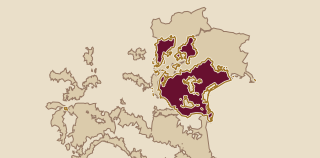
Valpolicella is an appellation in the western half of Verona's wine country, running from the Adige valley into the hills to the north and northeast of the city. It produces red wines from Corvina, Corvinone, and Rondinella, with still Valpolicella at one end of the range and Amarone, made from dried grapes, at the other. The drying process concentrates sugar, flavour, and tannin, producing wines that age for years and fill the mouth with dried fruit, leather, and dark spice.
Eastern Valpolicella sits closer to Verona than the classic zone to the west, and Pasqua's three vineyard projects occupy a single ridge there. The position gives a shared geological and climatic baseline across the plots, which matters when the winery is trying to build wines with consistent character across multiple growing seasons.
In the cellar
Vineyards and cellar
The Mizzole vineyard has been farmed organically for over ten years. Organic cultivation at this scale means no synthetic herbicides, pesticides, or fertilisers in the vine rows, which tends to produce grapes with cleaner aromatic expression and more defined fruit character.
Hey French requires an unusual cellar sequence. Each of the six component vintages spends three to four months on its lees before blending, a step that builds texture and weight. The assembled wine then ages six to eight months in first-use barriques and tonneaux with medium or light toast. First-use wood at this level of toast adds gentle spice and a light vanilla thread without overwhelming the Garganega and Sauvignon Blanc fruit.
Wines to know
The range in view
Hey French is a multi-vintage white wine blending six harvests: 2015, 2018, 2019, 2020, 2022, and 2024. The grape varieties are Garganega and Sauvignon Blanc. Garganega, the white grape at the centre of the Soave appellation east of Verona, brings almond character and a soft, slightly waxy mid-palate. Sauvignon Blanc adds a herbaceous, green-edged top note. Volcanic minerality threads through both, giving the wine a dry, almost saline length. The multi-vintage construction means no single growing season dominates the profile: the winery is selecting for expressiveness and building toward a consistent aromatic house character rather than vintage variation.
Mai Dire Mai is Pasqua's Amarone della Valpolicella, made from dried Corvina, Corvinone, and Rondinella grapes. The 2013 vintage is dark and dense, with underbrush, morello cherry, cedar, cocoa, and leather on the nose. The palate shows notable acidity for such a concentrated wine, alongside firm but integrated tannin and a finish that does not shorten quickly. Two years in new French oak gives it a spice framework and cedar depth that older-cask Amarone does not carry.
A useful way in
A bottle to begin with
Start with Hey French. It is made from Garganega and Sauvignon Blanc, blended across six harvests from 2015 to 2024, with lees ageing and a period in first-use French oak. The nose is aromatic and clear: exotic fruit, chamomile, sage, a light herbaceous thread. The palate is fresh and dry, with the almond softness of Garganega filling the middle and a saline mineral finish. It is not a conventional Veneto white, which is part of the point: the multi-vintage construction is Pasqua's own idea, and the wine tastes like it came from a deliberate decision about what white wine from this part of Italy can do.