
Why it matters
The producer
Pieropan makes white wine from the Classico hills of Soave, an area of volcanic and limestone hillside vineyards in the Veneto, north-east Italy. The primary grape is Garganega, and the estate's two single-vineyard wines, Calvarino and La Rocca, sit at the centre of everything the family does.
The decisive figure in the estate's history is Leonildo Pieropan, known as Nino, who took over from his father and uncle in the late 1960s after studying oenology and viticulture at Conegliano. He had a clear idea: individual vineyards in the Classico hills had distinct characters rooted in soil type, microclimate, and vine age, and those characters were worth preserving in the bottle rather than blending away. In 1971, he released Calvarino as a labelled single-vineyard wine. The family cites it as Italy's first single-vineyard white.
Place and vineyards
Where the wines begin
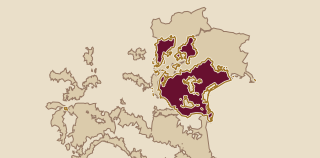
Soave Classico is a sub-zone within the broader Soave DOC, concentrated around the hill country east and south of the medieval walled town of Soave in the Veneto. The distinction between Classico and the wider DOC is not administrative formality. The flat-land extension of Soave, planted on alluvial valley soils at high yields, produced the dilute commodity wine that spent decades damaging the appellation's reputation. The Classico hills are volcanic and limestone, lower-yielding, and capable of site differentiation in single-vineyard bottlings.
Pieropan's 40 hectares sit entirely within the Classico zone. The labels carry Soave Classico across the whole range, and the step up from the estate wine to the two single-vineyard bottles is a step up in site specificity.
In the cellar
Vineyards and cellar
All 40 hectares are farmed organically. The shift away from chemical weeding predated the formal conversion, so the transition was gradual rather than abrupt. Andrea oversees viticulture and has also planted an experimental Piwi variety on a small rooftop plot at the winery.
In the cellar, Dario works to different specifications for each wine. The estate Soave Classico is fermented and aged in concrete, which preserves the aromatic freshness and citrus character of Garganega without adding oak weight. Calvarino also uses concrete, with extended lees ageing that adds textural grip. La Rocca is fermented and aged in oak barrels, which gives the wine its fuller body and a different aromatic register compared to the other two wines.
Wines to know
The range in view
The Soave Classico range moves through three positions.
The estate Soave Classico blends Garganega with Trebbiano di Soave, fermented and aged in concrete. It is the youngest wine in the range and the most immediately accessible. White flower, citrus peel, and almond on the nose; clean acidity and a short-to-medium finish on the palate. Pieropan positions it as the most representative wine in the house, a clear example of what Garganega does in the Classico hills without site-specific complexity.
A useful way in
A bottle to begin with
Calvarino is the right first bottle. It is the wine that established Pieropan's argument about the Classico hills and it has been in continuous production since 1971. Garganega with a small portion of Trebbiano di Soave, concrete-aged, extended on the lees on volcanic basalt soil: the combination puts the saline mineral character of the site directly in the glass without the oak layer in La Rocca. The acidity is firm and the finish long and dry. Start with Calvarino to understand what the volcanic hill does to Garganega and why Pieropan built the range around individual sites.