
Why it matters
The producer
Planeta is a Sicilian estate that has spent thirty years mapping the island, territory by territory, grape by grape. Its vineyards spread across five distinct zones from the western heartland around Menfi to the volcanic soils of Mount Etna in the northeast, from the sun-baked Noto DOC in the southeast to the north coast at Capo Milazzo. Alessio Planeta serves as CEO and winemaker. Francesca, Santi and Chiara joined the business.
The Planeta family has owned the underlying land for more than seventeen generations. For most of that history the property fed the bulk wine trade. The shift to estate bottling came in the 1990s and grew directly from a decision made a decade earlier by Diego Planeta, Alessio's uncle, who held the presidency of the Instituto Regionale della Vite e del Vino from 1985 to 1992 and used that institutional position to press for a wager that had no precedent on the island.
Place and vineyards
Where the wines begin
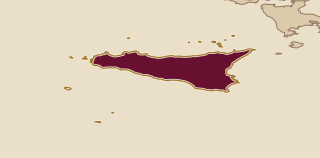
Sicily is large enough that a producer with estates in five of its territories is effectively working five different climates, soils and elevation profiles under one name. Planeta's western base at Menfi sits close to the coast in a warm, limestone-influenced zone where international varieties including Chardonnay ripen fully. Moving southeast, Noto and Vittoria produce the island's two best-known native reds: Nero d'Avola in Noto, Frappato in Vittoria. These are lower-elevation zones with sandy soils and long, dry summers.
Each territory produces wines in its own appellation or DOC. The bottle on the shelf carries the name of the place it came from.
In the cellar
Vineyards and cellar
All cultivated land across Planeta's five territories, including vineyards, olive groves, almond groves and grain fields, is certified organic. The decision to farm without synthetic inputs applies across the whole agricultural estate rather than to selected parcels.
The Chardonnay comes from two named vineyards, Ulmo and Maroccoli, both in western Sicily. It is fermented and aged in French oak, which contributes texture and a warm, rounded mid-palate weight to the wine's tropical fruit character. The Etna wines include whites from Carricante and reds from Nerello Mascalese.
Wines to know
The range in view
From western Sicily, the Planeta Chardonnay is the estate's oldest international-variety wine and one of its most widely recognised. Made from 100% Chardonnay from the Ulmo and Maroccoli vineyards, it is fermented and aged in French oak, producing a full-bodied white with ripe citrus and stone fruit, a creamy mid-palate from oak contact, and a warm finish.
Santa Cecilia is a single-variety Nero d'Avola from Noto. First made in 1997, it is the estate's benchmark for the grape in the DOC: deep-coloured, with ripe dark fruit, firm tannin from both grape and oak, and the long finish that Nero d'Avola from calcareous southeastern soils delivers at its best.
A useful way in
A bottle to begin with
Start with Santa Cecilia. It is a single-variety Nero d'Avola from the Noto DOC in southeastern Sicily, first made in 1997. The grape is native to Sicily, the site is calcareous and warm, and the wine shows what Nero d'Avola at full ripeness produces: deep ruby colour, dark plum and black cherry fruit with a violet note, firm tannin with some oak weight behind it, and a long, warm finish.