
Why it matters
The producer
Quinta da Fonte Bela gathers vineyards, winemaking and visitor facilities on one property. DFJ Vinhos has its offices and winemaking centre there, alongside a bottling line, warehouses, laboratory and visitor tasting room. José Neiva Correia founded DFJ Vinhos in 1998, and DFJ is a family firm.
The estate has 50 hectares planted with Alicante Bouschet, Shiraz, Tannat, Moscatel and Sauvignon Blanc. Production on DFJ's estates follows Integrated Production, a sustainable agriculture regime. An on site cooperage renovates French Allier barriques, the only oak barrel type used at DFJ.
Place and vineyards
Where the wines begin
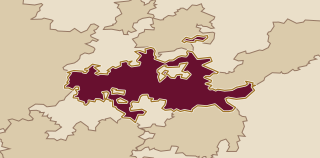
Vila Chã de Ourique places Quinta da Fonte Bela in Cartaxo, 80 kilometres north of Lisbon and five kilometres west of the Tagus River. It is a one hundred year old property. Its exterior architecture is characteristic of southern France and unique in Portugal.
Wines to know
The range in view
Quinta da Fonte Bela's named grape plantings divide into red and white varieties. Alicante Bouschet, Shiraz and Tannat are red grapes, while Moscatel and Sauvignon Blanc are white grapes. Red grapes contribute colour and tannin through their skins. White grapes are usually pressed with less skin contact, preserving acidity and aroma.
The five varieties cover two wine families, from deeply coloured reds with dark fruit and tannin to aromatic whites carried by acidity.