
Why it matters
The producer
Quinta da Pellada is a family producer in Pinhanços whose reds and whites begin with Dão’s mixed native plantings rather than a single house grape. Álvaro de Castro inherited the property in 1980 and restarted an activity that had fallen quiet for a generation, so the wines reconnect an older vineyard inheritance with a working cellar. The first Quinta de Saes-labelled wine arrived from the 1989 vintage; Maria Castro’s arrival in 2001 brought trained oenology into the family operation.
The modern estate began as a return to work. Álvaro de Castro was a civil engineer when he inherited the property, and restoring it meant rebuilding a wine project after a generation without one. The family later expanded the human side of that work when Maria Castro joined officially in 2001, while Ataíde Semedo and Tiago Félix became part of the oenological support team. The resulting range keeps both quinta names in view: Quinta da Pellada and Quinta de Saes each carry native grapes, site and cellar handling into red and white bottles.
Place and vineyards
Where the wines begin
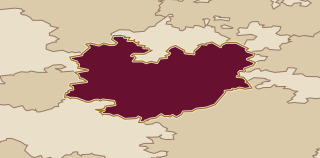
Pellada and Saes are two quintas within the wider Castro family project in the Dão. Their wines come from vineyards set between 450 and 600 metres, where elevation places the vines above the valley floor and granite forms the ground beneath them. In a region built around native varieties and blends, that setting matters in the bottle: white wines can carry acidity and texture, while red blends have fruit, dry tannin and the capacity for oak ageing.
Granite-based soils and altitude are the physical frame for the estate’s field blends. A mixed vineyard does not separate varieties into tidy blocks: grapes grow and ripen together, then enter the wine together. One historic Pellada vineyard holds 48 varieties, making its bottle material a record of old Dão planting rather than a recipe assembled from separately sourced grapes.
In the cellar
Vineyards and cellar
The estate works with more than 40 native grape varieties, mainly in field blends, while aiming for wines that express individual vineyards and parcels with increasingly natural practice. That combination makes parcel work more important than a varietal formula: the grower follows what is planted in each site, and the finished wine carries that mixture of fruit, acidity, tannin and texture.
Cellar treatment changes from bottle to bottle. The documented Quinta da Pellada red ferments in stainless steel before oak élevage, so fruit and fermentative freshness meet oak during ageing. The white Reserva bottling is also documented with its own blend, maturation and vinification, allowing acidity and texture to remain central rather than treating white wine as a lighter version of the reds.
Wines to know
The range in view
The range moves across two quinta names and two colours, with the shared thread being indigenous grapes and blended plantings. Quinta da Pellada Red joins a native field blend with named varieties, stainless-steel fermentation and oak élevage; it is the fuller, more structured part of the documented range, where fruit meets dry tannin, oak and weight.
Quinta de Saes brings a different register. Tobias Tinto is a red bottling with its own documented composition and vinification, while Quinta de Saes Reserva Branco 2023 is a white blend with recorded grapes, maturation and acidity-led texture. Together they show why the family’s wines are better read through sites, mixed vines and colour than through one supposed signature grape.
A useful way in
A bottle to begin with
Start with Quinta da Pellada Red. It brings the estate’s central material into one bottle: an indigenous field blend, named native varieties, stainless-steel fermentation and oak élevage. The wine’s fruit sits in a dry red frame of tannin, weight and oak, rather than presenting one grape in isolation. That sequence—mixed old-style planting, fresh fermentation, then time in oak—makes the bottle a direct introduction to how Pellada turns a Dão vineyard into a structured red.