
Why it matters
The producer
Quinta do Crasto has records of wine production reaching back to 1615. The name Crasto comes from the Latin castrum, meaning Roman fort. Today Tomás Roquette manages the winery, Manuel Lobo is the oenologist, and Miguel Roquette leads marketing and sales.
Old terraces contain mixed plantings with vines up to 90 years old. The cellar combines traditional granite lagares with temperature control, stainless steel tanks and pneumatic wine presses. Temperature control helps manage fermentation heat while the cellar equipment joins traditional vessels with modern handling.
Place and vineyards
Where the wines begin
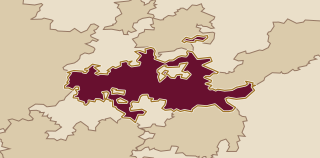
In the Cima Corgo, the estate covers 335 acres of south facing slopes extending from the banks of the Douro River up to approximately 600 metres. The property is officially classified as an A grade vineyard property.
The vineyards are planted primarily on terraces carved from schist, the Douro's slate like bedrock. Schist allows vine roots to penetrate deeply in search of water. The Roquette family also added a vineyard in the Upper Douro, also known as the Douro Superior.
Wines to know
The range in view
The range includes a Vintage Porto and two red wines, Crasto Superior Douro Red and Quinta do Crasto Vinha Maria Teresa. The Vintage Porto is a fortified wine from Porto, while the other two bottles are red wines.
The names divide the range by style and place. Porto identifies the fortified bottling, while Douro appears directly in one red wine's name. Vinha Maria Teresa provides a second red wine within the estate's named range.