
Why it matters
The producer
The estate was created in 1816 for Infante D. Pedro, later Pedro IV of Portugal and Pedro I of Brazil. The Roseira family has owned it for more than a century, with six generations from Covas do Douro working in vineyards and wine. That long family connection now reaches from the Douro fruit in Gontelho to bottles carrying the Quinta do Infantado name, rather than ending with bulk Port sold on to another house.
João Lopes Roseira began the family’s fortified-wine production after purchasing Quinta do Infantado. Decades later, Luís and António Roseira changed the commercial shape of that work by estate-bottling Port in 1979. Ruby, Tawny and 20 Years Old Port were released that July, creating bottles in which the family could present youthful fruit, oxidative wood ageing and aged Tawny character under its own name.
Place and vineyards
Where the wines begin
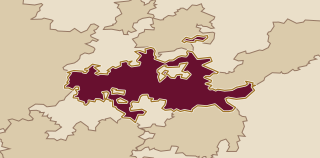
Quinta do Infantado sits in Vale de Gontelho, close to Pinhão in the Douro. Gontelho is more than a location on the label: it is the source of the indigenous field blend used for the 2021 Douro Red. The same estate works in a region associated with Port, so the range places dry, tannic red wine beside sweet fortified wine without treating either as an afterthought.
The estate works 12 hectares of vineyards organically. The documented vineyard area matters because the wines are drawn from a defined holding near Pinhão rather than assembled as a generic regional blend. In the Douro Red, fruit from Gontelho is fermented and aged as a dry table wine; in the Port range, Douro grapes become concentrated fortified wines whose sweetness, body and ageing style depend on the individual bottling.
In the cellar
Vineyards and cellar
For the Douro Red 2021, indigenous varieties from Gontelho are fermented in lagares, with foot treading and native yeasts, before oak ageing. Foot treading works the fermenting skins gently, while the subsequent oak time accompanies a full-bodied red with firm but textured tannin, black and red fruit, savoury notes and a persistent finish.
Cellar choices divide the Port styles clearly. The unfiltered LBV 2021 undergoes extended élevage before bottling, and its longer fermentation produces the house’s slightly drier LBV style. Reserva Especial Ruby avoids wood ageing, spending time in concrete and stainless steel instead; limiting oxidative contact keeps dark fruit to the fore while the fortified wine retains sweetness and full body.
Wines to know
The range in view
The Port range runs from Ruby and Tawny through 20 Years Old, Vintage Port, LBV and Reserva Especial Ruby. Ruby is the youthful-fruit end of the range; Tawny and aged Tawny bring dried-fruit, nutty notes and the softer texture associated with oxidative ageing. Vintage Port concentrates a declared year for bottle development, while LBV offers dark fruit, spice, sweetness and fortified-red grip after extended cellar ageing.
Reserva Especial Ruby takes another path. Concrete and stainless steel preserve a fresh dark-fruit profile instead of adding wood-aged oxidative notes, so the wine reads as sweet, full-bodied Port with fruit at its centre. The dry Douro Red 2021 supplies the counterpoint: black and red fruit, savoury detail, firm textured tannin, oak and enough weight for ageing.
A useful way in
A bottle to begin with
Choose Quinta do Infantado Douro Red 2021. It is a dry red from indigenous Douro varieties grown in Gontelho, fermented in lagares with foot treading and native yeasts, then aged in oak. Black and red fruit, savoury notes, full body and firm textured tannin show how the estate handles its vineyard fruit when fortification is left aside. Its persistent finish and capacity to develop in bottle make it a useful starting point before moving into the sweeter, more concentrated Port range.