
Why it matters
The producer
Camilla Karlsson has brewed organic, unpasteurized and unfiltered kombucha since 2013. At Qvillinge, the active yeast-and-bacteria culture remains part of a process that also includes hand production, glass bottling and a preference for nearby ingredients. Those choices keep the range close to raw materials: green tea and honey in jun, local honey in mead, and fruit, berries, flowers, herbs or spices across the wider line.
The producer's range reaches beyond kombucha without losing that fermentation focus. Jun uses green tea and honey, mead uses local honey with organic fruit, spices and berries, cider adds another fermented format, and mölska combines water, malt, honey, hops and yeast.
Place and vineyards
Where the wines begin
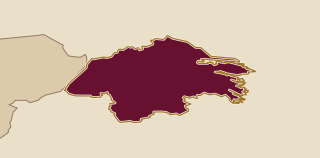
Kvillinge Prästgård places the brewery on a working family farm outside Norrköping, while independent location information lists Qvillinge Ekologiska in Åby, Östergötlands län. The farm setting supports the use of nearby ingredients, especially organic honey produced in Östergötland for the jun. Tea follows a different route because it cannot be grown in Sweden, so Qvillinge imports it from organic farms in Asia.
The place therefore appears in the bottle through sourcing and style. Honey can carry a local Swedish connection, while tea remains an essential imported base. The range combines those two geographies in a lightly carbonated drink made at the farm brewery.
In the cellar
Vineyards and cellar
The brewery's equivalent of vineyard work begins with ingredient selection. Kombucha uses organic tea, organic Nordic beet sugar, and organic or wild fruits, berries, spices, flowers and herbs. The active yeast-and-bacteria culture ferments that base naturally, then light carbonation supplies the fine fizz found in the finished drink. Glass bottling keeps the packaging aligned with the producer's stated preference to avoid chemical migration from plastic.
Jun follows a separate recipe built on green tea and honey instead of sugar. Each batch is brewed by hand and allowed time for organic acids and beneficial bacteria to develop. Because the jun is neither pasteurized nor filtered, it needs refrigeration and has an indicated shelf life of about six months. The method leaves fermentation and honey at the centre of its flavour.
Wines to know
The range in view
Qvillinge's range is organized by fermented base, not grape, appellation or vintage. Kombucha and hard kombucha bring tea, fruit, herbs, bubbles and, in the hard versions, a drier drinking context. Qvillinge Hard Kombucha Original is fruity and lightly sweet, with citrus, green-tea and herbal notes. Hard Kombucha Ingefära shifts the profile toward spice.
Jun replaces beet sugar with honey. Sparkling Hard Jun Jasmin Honung brings floral and fruit character around a honeyed green-tea base, while Hallon Ekologisk Jun places raspberry at the front of the drink. Mead uses local honey with organic fruits, spices and berries, so its range position is honey-led and more aromatic. Mölska uses water, malt, honey, hops and yeast, giving the producer a different fermented base again.
A useful way in
A bottle to begin with
Qvillinge Hard Kombucha Original is the bottle to open first. Its fruity, lightly sweet profile shows citrus, green tea and herbs in one glass, while light carbonation and natural fermentation keep the drink moving across the palate. Systembolaget lists 2.8 grams of sugar per 100 millilitres and recommends serving it at 6 to 8°C, either by itself or with light meat and salads.