
Why it matters
The producer
Ricossa farms 74 hectares in Castel Boglione, a village in the Monferrato zone of Piemonte, on slopes that curve into a natural amphitheatre around the estate. Barbera is the defining grape here, and has been since the early twentieth century, when the brand won gold medals at Italian wine competitions by 1911. The name itself reaches back to Lorenzo Ricossa, whose family ran a distillery from the same historic building in the late nineteenth century before the operation turned toward wine.
Today the estate draws on a further 46 hectares of partner vineyards spread across Monferrato, Roero and Langhe, which allows Ricossa to work across all three of Piemonte's principal wine landscapes from a single base. The range runs from Barbera d'Asti at the core to Barbaresco and Barolo at the top, with a certified-organic premium line, Campolibero, and a separate appassimento tier made from partially dried grapes.
Place and vineyards
Where the wines begin
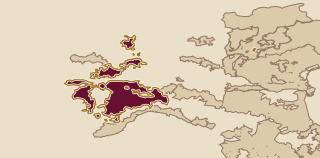
Castel Boglione sits in the Monferrato hills east of Asti, in the part of Piemonte where Barbera is the dominant red grape of the landscape rather than Nebbiolo. The Monferrato subzone is lower and warmer than the Langhe ridge to the southwest, which gives Barbera sufficient ripeness to fill out the grape's naturally high acidity with generous fruit and body. The Astigiano, where Ricossa's origins lie, is the heartland of Barbera d'Asti DOCG, an appellation that covers a broad swathe of the Asti and Alessandria provinces and produces some of the most direct expressions of the grape in Piemonte.
Partner vineyards in Roero and Langhe extend the portfolio north and south. Roero, across the Tanaro river from Barolo, is the home of Arneis, a white grape that produces floral, almond-edged dry whites under the Roero Arneis DOC. Langhe provides access to Nebbiolo for Barbaresco and Barolo, two DOCG appellations built entirely on that grape and subject to minimum ageing requirements.
In the cellar
Vineyards and cellar
The 74-hectare estate in Castel Boglione is farmed across the amphitheatre slopes, giving the team control over drainage, canopy orientation and harvest timing across different elevations. Partner vineyards in Roero and Langhe are worked by the same oenological team that manages the estate, which allows consistent farming decisions across appellations rather than simply purchasing grapes on the open market.
In the cellar, the Barbaresco DOCG follows the minimum requirements of the appellation: at least two years total ageing, with at least nine months spent in wood. That wood contact softens Nebbiolo's grip and adds secondary notes of vanilla, hazelnut and spice to the grape's natural frame of red fruit and dried flowers. The appassimento wines, made from grapes left to dry and concentrate before pressing, have higher sugar at fermentation and produce wines with deeper colour, richer texture and lower acidity than the classic cellar tier. The Campolibero organic range applies certified farming across all three of its appellations, with no conventional treatments in the vineyard.
Wines to know
The range in view
The range is built around four distinct lines. The Cellar line covers the classic Piemontese appellations: Barbera d'Asti, Barolo, Barbaresco and Roero Arneis. These are the estate's most direct expressions of each grape and appellation, with Barbera d'Asti showing the dark cherry fruit, firm acidity and medium body typical of the Astigiano, and Roero Arneis bringing white peach, almond and a clean finish typical of the grape.
The Appassimento line uses grapes that have been partially dried to concentrate sugars, which produces fuller-bodied, warmer reds with deeper colour and richer mid-palate weight. The Lorenzo Ricossa line is a named premium selection built around Barbera d'Asti and heritage positioning.
A useful way in
A bottle to begin with
Start with the Barbaresco DOCG. It is made entirely from Nebbiolo grown across Ricossa's partner vineyards in the Langhe, aged for at least two years with a minimum of nine months in wood. In the glass it is garnet-edged ruby, with raspberry, dried flowers, hazelnut and warm spice on the nose. The tannins are firm and present, as they always are in Nebbiolo, but the wood ageing has added enough roundness to make the wine approachable now without losing the structural backbone that allows it to develop further. The dried-herb and anise finish is long and distinctly Nebbiolo.