
Why it matters
The producer
Robert Mondavi described the 1966 opening as Napa’s first major new winery since Prohibition. The estate’s defining decision was geographical rather than decorative: To Kalon Vineyard in Oakville became its heart, linking a named vineyard to Cabernet Sauvignon and Sauvignon Blanc. That link still helps decode the bottles. A Napa Valley Cabernet works from broader regional sourcing, while a To Kalon Reserve narrows the frame to selected vineyard blocks.
The company was sold to Constellation Brands in 2004 for $1.3 billion. The bottles remain easiest to read through the original Oakville focus: Cabernet carries the red-wine argument, while To Kalon Sauvignon Blanc supplies the white-wine line behind Fume Blanc.
Place and vineyards
Where the wines begin
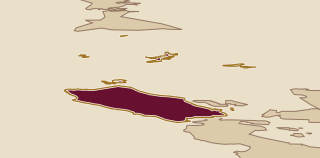
Oakville sits in Napa Valley, and To Kalon is located there in the valley’s centre. On the label, Napa Valley and To Kalon do different work. The 2021 Napa Valley Cabernet Sauvignon is a broader-sourced, open-knit Cabernet; the 2019 To Kalon Reserve comes from selected To Kalon blocks, concentrating attention on one vineyard relationship and a more compact red-wine shape.
That distinction matters more than a generic Napa shorthand. Cabernet Sauvignon is the red grape associated with To Kalon, but the site is also tied to Sauvignon Blanc. Fume Blanc is therefore not an unrelated white bottle: it is the Sauvignon Blanc branch of the same Oakville vineyard story.
In the cellar
Vineyards and cellar
To Kalon supplies the estate’s central vineyard reference, but the Cabernet bottlings use it differently. The 2021 Napa Valley Cabernet is described as versatile and open-knit, a red made from broader Napa Valley sourcing. The 2019 To Kalon Reserve draws from selected vineyard blocks, so the fruit source becomes narrower before it reaches the cellar.
The Reserve then receives 100% new French oak. New barrels bring oak spice and a firmer frame around Cabernet fruit, adding body and tannin grip through the finish. Cold-fermentation tanks and French barrels belong to Mondavi’s longer cellar story; in the Reserve, the documented new-oak treatment is the clearest current example of how cellar material changes the finished wine.
Wines to know
The range in view
The supported range has three useful threads. First comes Napa Valley Cabernet Sauvignon, represented here by the 2021: broader in source, open-knit in structure, and built for a more flexible Cabernet occasion. Its fruit, acidity and tannin are not asked to carry the same selected-block concentration as the Reserve.
Second is the 2019 To Kalon Reserve Cabernet Sauvignon, made from selected To Kalon blocks and aged in 100% new French oak. It is 97.5% Cabernet Sauvignon and 2.5% Petit Verdot. The vineyard focus and new oak move the wine toward greater weight, oak spice, tannin and a longer, more compact finish.
A useful way in
A bottle to begin with
Start with the 2021 Napa Valley Cabernet Sauvignon. It is the more open-knit Cabernet in the documented comparison, so its fruit, acidity, body and tannin are easier to meet before the selected-block scale and new-oak weight of the To Kalon Reserve. The wine offers a dry Cabernet frame with fruit at the centre and tannin carrying the finish. It also makes the label hierarchy legible: Napa Valley first, then To Kalon when the bottle calls for a tighter vineyard focus.