
Why it matters
The producer
Stefano Bellamoli farms 10 hectares of terraced hillside in the Valpolicella Classica zone, the original historic core of the appellation in the hills northwest of Verona. Most estates in the region build their reputation on Amarone, the wine made from dried grapes that commands the highest prices and the most column inches. Il Sasso makes Amarone too, but it treats the Valpolicella Classico, its lightest and most transparent wine, as the truest argument for what its vineyards produce.
The choice is not contrarian for its own sake. The rocky calcarenite soil, the 300-metre altitude, and the south-facing terraces all push Corvina toward high acidity and vivid red fruit rather than the sheer density that suits long drying. The Classico captures that character directly. The Amarone is a separate category, built on four months of grape drying and a different set of demands.
Place and vineyards
Where the wines begin
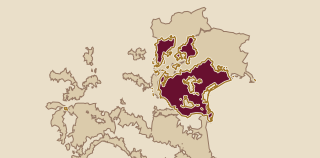
Valpolicella Classica is the original production zone for Valpolicella, a set of valleys running northwest from Verona into the foothills of the Lessini mountains. The Classica hills are distinguished from the broader Valpolicella DOC by their steeper terrain, older plantings, and the calcarenite limestone that underlies most of the hillside soils.
Il Sasso sits at 300 metres, high enough to preserve acidity in Corvina even through warm growing seasons. The soil above the yellow calcarenite is shallow, sometimes only a few centimetres of grassy cover before the rock begins. Roots push deep to find water and nutrients, producing fruit with concentration and mineral grip rather than soft extracted body.
In the cellar
Vineyards and cellar
Guyot training on south-facing terraced slopes allows individual vine management and limits yield per plant compared to the Pergola Veronese system once common in the region. Lower yields from rocky calcarenite soil produce smaller berry clusters with more concentrated juice and sharper acidity in the Corvina, which forms the backbone of all three wines.
Harvest timing determines which wine a parcel of fruit becomes. Grapes for the Classico are picked fresh and fermented immediately, preserving the high acidity and red-cherry lightness of the vintage. Grapes destined for the Superiore come from older vines or later picking, adding concentration without abandoning the fresh-fruit character. For Amarone, selected fruit goes into drying rooms for up to four months, concentrating sugars and shifting the flavour register toward darker fruit, dried cherry, and spice before fermentation begins.
Wines to know
The range in view
Il Sasso produces three wines, each marking a different point on the Valpolicella spectrum from fresh to dried-grape.
Valpolicella Classico DOC is the lightest wine in the range and the one the estate treats as its most direct statement of place. It is pale in colour, high in acidity, and vivid with red-cherry and red-berry fruit from Corvina grown on calcarenite at altitude. The producer recommends serving it chilled, a suggestion that signals the freshness and the lack of extracted weight. The estate describes it as light, fresh, acidic, rich in red fruits, and good served chilled.
A useful way in
A bottle to begin with
Start with the Valpolicella Classico DOC. It is pale red, transparent, high in acidity, and built entirely around red-cherry fruit from Corvina, Corvinone and Rondinella grown on shallow calcarenite soil at 300 metres. No wood, no additives, concrete ageing, and spontaneous fermentation from indigenous yeasts mean what is in the glass is the vineyard unmediated. Serve it cool, with food, without ceremony. The Classico makes the estate's argument more directly than the Superiore or the Amarone: this is what the Valpolicella Classica hillside tastes like when the cellar stays out of the way.