
Why it matters
The producer
The Aldrighetti family has farmed the same hillside ground in Marano di Valpolicella since 1818. The estate takes its name from the Bignele locality, a small area near the hamlet of Valgatara where the family first acquired land, and that name has stayed on every bottle since. Over two centuries, the holding has grown to nine hectares spread across three communes in the Valpolicella Classico zone, and the operation remains entirely in family hands.
The current generation divides the work with unusual concreteness. Angelo, one of the founding generation still active at the estate, tends the vineyards through every stage of the season. His brother Luigi directs winemaking in the cellar. Their son and nephews and nieces carry the operational load: Nicola moves between vineyard, cellar, bottling, and labelling; Silvia manages commercial and administrative work; Cecilia runs cellar tours, tastings, and the wine accommodation. There is no hired management layer between the vines and the visitor.
Place and vineyards
Where the wines begin
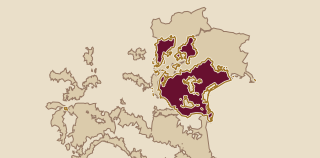
Valpolicella Classico is the original, legally defined core of the Valpolicella appellation, a cluster of valleys running west of Verona toward Lake Garda. Marano di Valpolicella sits in the most western of those valleys, away from the flatland extensions that carry the broader Valpolicella DOC name. Wines labelled Valpolicella Classico must draw grapes from within this historic zone.
Le Bignele's nine hectares sit at approximately 300 metres above sea level across the communes of Marano di Valpolicella, Negrar, and San Pietro in Cariano. At that elevation, the growing season is longer and cooler than the valley floor, slowing ripening and keeping acidity in the grapes. The Valpolicella valleys open southward and catch afternoon sun, but the hillside parcels hold enough altitude to preserve freshness through harvest. The fruit retains lift even when the winemaking method, as in Ripasso or Amarone, concentrates it further.
In the cellar
Vineyards and cellar
The nine hectares are planted with Corvina, Corvinone, Rondinella, and Molinara, the four native varieties that form the legal backbone of Valpolicella. Angelo manages all vineyard work through the season. The parcels sit at around 300 metres, where cooler temperatures slow ripening and the limestone-rich ground keeps yields in check.
In the cellar, Luigi oversees every stage of winemaking. The Valpolicella Classico is vinified conventionally and released for early drinking. For the Ripasso, the Valpolicella base wine passes over the pressed pomace remaining from Amarone fermentation and referments for ten days. No dried grapes are added. The wine then matures for one year in large oak cask. That extended pomace contact draws colour, body, and dried-fruit character from the grape skins without pushing the wine into Amarone territory.
Wines to know
The range in view
All three wines in the range come from the same Corvina, Corvinone, Rondinella, and Molinara blend grown across the estate's hillside parcels.
The Valpolicella Classico is the entry wine: a light-bodied, cherry-led red built for the table, with the characteristic bitter-edged finish that Corvina brings. It is made without extended oak ageing and is suited to drinking young.
A useful way in
A bottle to begin with
Start with the Valpolicella Classico Superiore Ripasso. It is Corvina, Corvinone, Rondinella, and Molinara from the estate's hillside parcels, refermented on Amarone pomace for ten days and aged one year in large cask. The wine sits at 14% alcohol and is dry from start to finish.