
Why it matters
The producer
Sogrape is a large Portuguese wine company with a specific Vinho Verde foothold. It is identified as the region’s largest producer, while Quinta de Azevedo near Barcelos supplies a more focused estate address for white wines from Loureiro and Alvarinho. That contrast matters in the bottle: Gazela presents Vinho Verde as a regional white, while Azevedo ties wine to an estate and two named grapes.
Sogrape began in 1942 during the Second World War, when its first venture was aimed at Brazil and worked from a rented cooperative winery at Vila Real. Mateus was born in that founding year and became the company’s central historical brand. Four decades later, the Guedes family bought Quinta de Azevedo, bringing an old estate near Barcelos into a business built around recognisable bottles. The result is a company story with two distinct wine threads: Mateus as the original rosé brand, and Vinho Verde through Gazela and Azevedo’s Loureiro-and-Alvarinho whites.
Place and vineyards
Where the wines begin
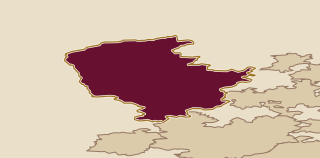
Vinho Verde occupies northwestern Portugal between the Douro and Minho rivers, the Atlantic Ocean and the mountains. Gazela Vinho Verde belongs to that broad northern Portuguese address, where a regional name can sit on a bottle rather than a single-vineyard designation. Quinta de Azevedo narrows the view: near Barcelos, it connects Sogrape’s Vinho Verde work to a particular estate producing Loureiro and Alvarinho whites.
The physical site named for Sogrape in Vinho Verde is Quinta de Azevedo, purchased by the Guedes family in 1982. Its manor and tower date to the 11th century, placing the estate’s white wines in a long-established setting near Barcelos. The concrete wine link from that site is grape-led: Loureiro and Alvarinho are the varieties used for its whites, so the estate name and grape names carry more useful meaning than an invented soil description.
In the cellar
Vineyards and cellar
Sogrape’s reported 1,600 hectares are a company-wide measure of vineyard scale, while Quinta de Azevedo provides a smaller Vinho Verde reference point with named grapes and a named location. Those two levels help sort the labels. Gazela is a Vinho Verde wine with slight carbonation, fruit, acidity and sweetness in its stated profile; Azevedo whites begin with Loureiro and Alvarinho. The finished wines therefore show different routes into the range: one through a regional style, the other through an estate and grape pairing.
Wines to know
The range in view
The range has three useful landmarks. Mateus Rosé Original is the historic bottle, born with Sogrape in 1942. Gazela Vinho Verde is the regional white: slight carbonation lifts its fruit profile, while acidity and sweetness shape a light, easygoing palate. Quinta de Azevedo’s whites are the estate wines, made from Loureiro and Alvarinho rather than presented as a generic company blend.
Together, those bottles separate Sogrape’s work by role. Mateus carries the founding-era rosé story. Gazela brings a lightly sparkling Vinho Verde texture and a balance of fruit, acidity and sweetness. Azevedo provides the direct connection between a named estate near Barcelos and two white-wine grapes.
A useful way in
A bottle to begin with
Choose Gazela Vinho Verde first. It is the bottle where Sogrape’s regional Vinho Verde presence is easiest to taste: a fruit-forward white with slight carbonation, light body, fresh acidity and a touch of sweetness. It also makes the label useful. “Vinho Verde” names the northern Portuguese region, while the wine’s small fizz and bright palate show a regional style rather than the estate-and-grape focus of Quinta de Azevedo.