
Why it matters
The producer
The García family spent about twenty years growing grapes for local wineries before beginning to bottle wine under the Suertes del Marqués name in 2006. That change put their own Listán Negro and Listán Blanco vineyards into the bottle, allowing the family to separate red and white wines by grape, parcel and cellar vessel instead of selling the crop as fruit alone.
The winery farms vineyards in the Orotava Valley and also controls 17 hectares belonging to local growers. Its own and rented holdings are reported at around 11 hectares, though one account divides that figure into nine owned hectares and two rented. This mix gives the range access to both estate fruit and long-standing local vineyard material without treating those sources as the same thing.
Place and vineyards
Where the wines begin
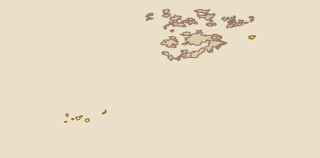
The Valle de la Orotava lies on northern Tenerife, within the Canary Islands. Suertes del Marqués works within the Valle de la Orotava DO, where a label can carry a place more specific than Tenerife while still speaking through local grape varieties. Listán Negro supplies the central red-wine thread; Listán Blanco, Tintilla and Malvasía widen the estate’s red and white palette.
Vineyards run from 300 to 750 metres above sea level. That vertical spread means fruit for different wines does not ripen in one uniform setting, and the estate can build range differences around site and harvest conditions. In the glass, the intended result is dry wine with fresh acidity and weight rather than a single broad “island” style.
In the cellar
Vineyards and cellar
The cellar uses native yeasts, concrete vats, 500-litre French oak foudres and larger vessels from 2,000 to 4,500 litres. Fining and filtration are rare. These choices give the winemaking room to handle red-fruit tannin in Listán Negro and the dry, mineral shape of the whites without making every bottle taste of the same oak treatment.
Concrete and large vessels support a different balance from small new barrels: fruit, acidity and texture can remain at the centre. The 500-litre foudres bring oak into the process on a broader scale, while the estate’s vineyard selections keep grape and site distinctions active. The result is a range where vessel is part of wine structure, not a substitute for vineyard character.
Wines to know
The range in view
7 Fuentes is the approachable red side of Suertes del Marqués: an indigenous-grape blend from the Valle de la Orotava, made with concrete tasting material in mind rather than an appellation name alone. Its role is to show Listán Negro-led red fruit, savoury earth and tannin in a wine with enough freshness to avoid a heavy finish.
Vidueño continues the red range with a separate estate wine, while Trenzado turns to white grapes and the braided-vine landscape that gives it its name. Vidonia is the white-wine line for Valle de la Orotava fruit. Vidonia V.P., begun in 2020, narrows that focus into a tiny estate-vineyard offshoot, aged with barrel and lees context rather than presented as a general description of all Vidonia.
A useful way in
A bottle to begin with
Vidonia V.P. 2021 is the first bottle to seek out when available. It is a small estate-vineyard white from the Vidonia project, made in only two barrels and yielding 2,660 bottles filled in September 2022. Its barrel-fermented white-Burgundy inspiration places lees, oak and texture beside Tenerife fruit, so the wine can show dry citrus, mineral savour and a broader palate while acidity carries the finish.