
Why it matters
The producer
The family had ties to Priorat before it made wine, but no inherited winemaking tradition to continue. That makes the 1996 start a new family project rather than the next chapter of an old cellar. Its bottles are rooted in estate-grown fruit, so the name on the label leads back to Poboleda vineyards rather than bought-in grapes.
Terres de Vidalba began with a vineyard rather than a family cellar inheritance. Barranc de la Bruixa gave the project an 11-hectare home, then TOCS became its first released wine in 2003. VIDALBA followed as a principal red, and No T’ho Diré expanded the sequence into White Grenache. Twenty years after the first estate, Calvari de Poboleda added another planted slope to the family’s holdings.
Place and vineyards
Where the wines begin
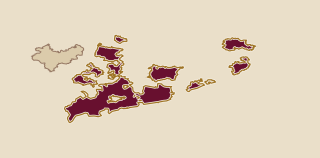
Poboleda places Terres de Vidalba within Priorat, while its vineyard map is divided between Barranc de la Bruixa and the later Calvari de Poboleda estate. Barranc de la Bruixa is the physical centre of the project; Calvari added slopes within Poboleda two decades later. The result is a small range built from the family’s own sites, with TOCS, VIDALBA and No T’ho Diré carrying that estate framework into different bottles.
Barranc de la Bruixa covers 11 hectares on what was once an old farm surrounded by forest. Its east-to-southeast exposure sits between 430 and 480 metres, and the ground is poor, well-drained slate. The site encourages vines to root slowly and deeply, keeping the growing conditions at the centre of the estate’s red and white-grape work.
In the cellar
Vineyards and cellar
The winery makes its wines from grapes grown on its own farm, a choice that keeps vineyard work and bottle production within the same family operation. At Barranc de la Bruixa, elevation, exposure and slate are the fixed conditions before grapes reach the cellar. The named wines then separate the range by bottle: TOCS marks the first release, VIDALBA carries the established red expression, and No T’ho Diré opens a White Grenache path.
Wines to know
The range in view
TOCS is the starting point: the estate’s first wine, released in 2003, and the original red marker in the range. VIDALBA followed as the central red name; a 2017 tasting found earthy tertiary aromas alongside vivid acidity and firm tannic structure, showing a bottle with both mature notes and palpable grip. No T’ho Diré followed as the estate’s first white wine made with White Grenache. A 2020 rosé reference under the same name is pale and fruit-led, so vintage and colour matter when choosing that label.
VIDALBA 2017 moves from fruit-and-herb character towards earthier, more mature aromas. On the palate, vivid acidity keeps the wine moving while assertive tannin supplies grip and a dry, structured finish. That combination suits a red shaped for the table: the acidity prevents the earthy notes from becoming heavy, and the tannin gives the wine weight after the fruit has receded.
A useful way in
A bottle to begin with
Begin with VIDALBA. It is the red that sits after TOCS in the estate’s story and shows the more developed side of the range: earthy aromas, vivid acidity, dry tannin and a finish with grip. It also gives Barranc de la Bruixa’s slate-grounded project a concrete form in the glass, without needing to treat the whole range as one style.