
Why it matters
The producer
In 1502, the Garai family surveyed the slopes of Mount Tokaj and made a deliberate selection: seven specific parcels, consolidated into a single estate. They named it after that act. Hétszőlő means seven vineyards in Hungarian, and the estate has carried that number through Habsburg seizure, imperial ownership, nationalization, and private sale. It is one of the longest-documented wine properties in the Tokaj region.
The estate now farms 55 hectares of vineyard on Mount Tokaj's slopes, certified organic since 2015. Technical director Gergely Makai leads the winemaking. His stated position is that organic farming protects vine vitality and produces better fruit, now and in the future. The two primary grapes are Furmint and Hárslevelű, and the wines run from a Hárslevelű-led Late Harvest to the estate's flagship 6 Puttonyos Aszú.
Place and vineyards
Where the wines begin
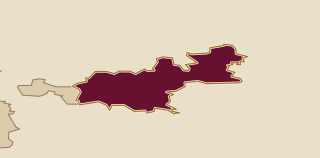
Tokaj sits in northeastern Hungary at the confluence of the Bodrog and Tisza rivers. The region's position matters because of how the rivers behave in autumn: morning mists rise from the water, afternoon sun burns them off, and the cycle of humidity and warmth creates ideal conditions for Botrytis cinerea, the noble rot that concentrates sugars in the grape skins and makes Aszú possible. Without that fungal infection, there are no aszú berries, and without aszú berries, the style that made this corner of Hungary famous does not exist.
Mount Tokaj rises at the heart of the appellation. Hétszőlő's 55 hectares lie on its slopes, and the elevation, aspect, and climate of those parcels determine the ripeness, acidity, and degree of botrytis that reach the cellar each harvest. The resulting bottles carry a legally defined label: Tokaji, the Hungarianized form that identifies the wine's regional origin and production rules.
In the cellar
Vineyards and cellar
Furmint dominates the estate's plantings. Its thin skin and high natural acidity make it more vulnerable to botrytis than almost any other grape, which is the point: infection concentrates sugars dramatically without collapsing the fruit's acid line. Botrytised berries shrivel and intensify, and these are hand-harvested individually, berry by berry, rather than by bunch. The selection is slow, labor-heavy, and dependent on the pace at which the fungus moves through the vineyard each autumn.
Hárslevelű, whose name translates as linden leaf, provides the aromatic base for the Late Harvest. Lower acidity than Furmint, rounder and more fragrant, it shows melon and elderflower rather than the driven stone fruit of the Aszú program.
Wines to know
The range in view
The range follows the Tokaj style hierarchy from lightest to richest.
The Late Harvest is Hárslevelű-led, the most accessible entry into Hétszőlő's sweet wine production. Lighter on the sweetness scale than either Szamorodni or Aszú, it opens with melon and elderflower, and the grape's natural aromatics give it a lifted, fragrant quality. The finish stays refreshingly crisp rather than heavy, which makes it the easiest bottle to approach without background in the region.
A useful way in
A bottle to begin with
The 6 Puttonyos Aszú is made from Furmint and has a silky texture. It draws together everything the estate does: hand-selection of botrytised Furmint berries from organically farmed parcels on Mount Tokaj, concentration through noble rot, and the Tokaj style that has defined the region's international reputation for centuries. The 2017 vintage scored 95 points from Decanter and was described as silky, supple, and youthful, with white peach, mock orange, and a fine acidity on the finish that carries the sweetness without letting it settle. Start here to understand what Furmint becomes when the harvest conditions are right and the cellar does not rush the process.