
Why it matters
The producer
Trentham Estate sits on the eastern bank of the Murray River at Trentham Cliffs, a small New South Wales settlement where the river marks the state line with Victoria. Anthony and Patrick Murphy founded the winery here in 1988, farming red loam over limestone on 45 hectares and drawing additional fruit each vintage from grower partners across the region. Anthony leads winemaking; Patrick brought the viticulture training.
The estate makes more than twenty varietals across two tiers, from Pinot Grigio and Sauvignon Blanc to Shiraz, Pinot Noir and Cabernet Sauvignon, at prices that sit well below the Australian premium bracket. The scale is substantial: the winery started with a 30-tonne crush and now processes up to 5,000 tonnes of fruit annually. An IWSC Trophy for Shiraz in 2008 remains the estate's highest-profile international result.
Place and vineyards
Where the wines begin
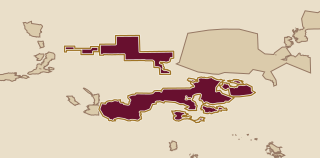
Trentham Cliffs is part of the Murray Darling wine zone, a warm, flat, irrigated growing district that runs along the Murray River through New South Wales and Victoria. The South Eastern Australia geographical indication covers this ground and much else besides, making it one of the broadest appellations in the country: a label that places a wine in a continent rather than a district.
What the Murray Darling provides is warmth, reliable sunshine, and water. The red loam over limestone soils at Trentham Cliffs retain moisture and drain freely enough to avoid waterlogging. The Murray River supplies irrigation, allowing the estate to manage vine stress through the dry summer. Harvest begins in mid to late January, ahead of most Australian wine regions, because the warmth ripens fruit quickly. That early window delivers ripe, generous flavour with acidity intact, which is the defining character of the wines.
In the cellar
Vineyards and cellar
The estate farms 45 hectares of its own vines and supplements that with purchased fruit from local growers. Minimal irrigation and reduced yields keep crop loads in check, concentrating flavour in the grapes before they reach the winery. Harvest in January means the cellar is working while much of Australian wine country is still weeks from picking.
White wines go into refrigerated tanks immediately after pressing and ferment with cultured yeast at cool temperatures over two to three weeks. The cold fermentation preserves aromatic lift and keeps the fruit fresh. Most whites are bottled young, shortly after vintage, to lock in that character. Chardonnay is the exception: it goes into French oak puncheons in the estate's underground barrel cellar and spends meaningful time ageing before bottling.
Wines to know
The range in view
The core range covers Pinot Grigio, Sauvignon Blanc, Chardonnay, Rosé, Pinot Noir, Shiraz and Cabernet Sauvignon. A second label, Banksia, offers lighter, more everyday versions of several of the same varieties at a lower price point.
The Pinot Grigio is the clearest expression of what the estate does with white grapes: lemon zest, green apple and pear on the nose, a palate with fresh citrus and pear, balanced acidity and 12.5% alcohol. It is clean and direct, bottled young to keep the fruit forward. The River Retreat Pinot Grigio, sold as Hope in some export markets, runs in the same register with a more citrus-forward lean: lime and apple on the nose, pale green in the glass.
A useful way in
A bottle to begin with
The Trentham Estate Pinot Grigio is the bottle to start with. It is the clearest statement of what cool tank fermentation and early January fruit deliver in this part of the Murray: aromatic and clean on the nose, lemon zest and green apple leading, a palate with pear and fresh citrus, and balanced acidity that keeps the whole thing alive without sharpness. At 12.5% alcohol it is light on its feet. It costs well below what the quality suggests it should. There is no oak, no barrel programme, nothing in the way between the fruit and the glass. That directness is the point.