
Why it matters
The producer
Vidigal Wines is a Portuguese wine company based in Cortes, Leiria, in central Portugal. Its entire commercial weight rests on one brand: Porta 6, a multi-expression range covering Lisboa red and white, Tejo red, Vinho Verde, and rosé. The company sources its Lisboa wines from Atlantic-facing vineyards, bottles them as fruit-forward, immediately drinkable blends of indigenous Portuguese grapes, and ships more than nine in ten bottles abroad. In 2021, the year Porta 6 crossed five million bottles sold, Abegoaria acquired Vidigal and folded it into a wine group with an estimated annual turnover of fifty million euros.
The company is based in Cortes, Leiria, in central Portugal.
Place and vineyards
Where the wines begin
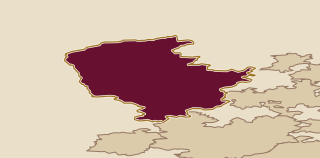
The Lisboa wine region runs down Portugal's Atlantic coast west of Lisbon, where ocean winds and morning fog moderate temperatures and keep acidity alive in the grapes. Vidigal draws its core wines from vineyards close to this coastline. The Atlantic influence shows in the finished bottles as freshness and lift, soft tannins in the reds, and zippy acidity in the whites, rather than the concentrated heat you find further inland.
The Tejo expression comes from a different appellation further east along the Tagus river valley, where the climate is warmer and the grape blend shifts accordingly. The Vinho Verde sits at the northern end of Portugal's wine map, in a wet, granitic region where high-acid, low-alcohol whites are the native style. Together these three geographic anchors give the Porta 6 range a breadth unusual for a single commercial brand: Atlantic freshness, Tejo depth, and Vinho Verde lightness.
In the cellar
Vineyards and cellar
Vidigal sources grapes from vineyards across the Lisboa region and Tejo. The Lisboa wines draw from Atlantic-facing parcels where moderate temperatures preserve fruit clarity and acidity. Fermentation for the white wines appears to use stainless steel, which keeps the tropical fruit character of the Branco clean and unadulterated by oak. The Lisboa red shows no documented oak ageing: the style is bright and soft rather than tannic or built for extended cellaring.
The Tejo red blend of Tinta Roriz, Castelão, and Touriga Nacional is assembled at documented proportions: 50% Tinta Roriz, 40% Castelão, 10% Touriga Nacional. Tinta Roriz brings dark fruit and spice; Castelão contributes body and earthy character; Touriga Nacional adds aromatic lift and some tannin. Together they produce a darker, more brooding wine than the Lisboa red, with pepper and menthol alongside plum and blackberry.
Wines to know
The range in view
Porta 6 Lisboa Red is the anchor bottle. A blend of indigenous Lisboa grapes from Atlantic-facing vineyards, it is built for immediate drinking: soft, ripe, and forward, with red berries, cherry, plum, violet, sweet spice, and dried fruit. Smooth tannins and no oak ageing give it a direct, unencumbered character.
Porta 6 Lisboa Branco is the white counterpart, vinified in stainless steel. The nose opens with light blossom and lemon; the palate moves toward pineapple, pear, tropical guava, and mango, all carried on a zippy acidity that pulls the wine to a dry, puckering finish.
A useful way in
A bottle to begin with
Porta 6 Lisboa Red is the right first bottle. It is the wine that built the export business, and it demonstrates what Atlantic-influenced Lisboa grapes taste like when handled without oak and made for immediate drinking. The fruit is forward: red berries, plum, cherry, and sweet spice from the first pour. The tannins are smooth enough to drink without food, and the soft acidity keeps the wine lively rather than heavy. There is no ageing required and no technical barrier to entry. Buy a bottle, open it the same evening, and you have a clear picture of what this company does and why it sells five million of them a year.