
Why it matters
The producer
Vignerons Propriétés Associés, or VPA, is a Rhône-based cooperative founded in 1994. Its 20 châteaux and estates work 2,500 hectares, so the name on the label covers a deliberately broad set of wines rather than one estate bottling. That scale brings 31 grape varieties and nine appellations into the range, with Grenache and Syrah appearing in several of the bottles that define it.
VPA was built in 1994 as a cooperative structure, bringing 20 châteaux and estates under one organisation. The result is a portfolio with room for distinct grape-led wines: 100% Grenache in Mr. Paul Red, a 70% Grenache and 30% Syrah blend in Chapitre Red, and 95% Syrah in Quitus. Rather than forcing these wines into one house style, the range makes the blend, appellation and cellar treatment visible bottle by bottle.
Place and vineyards
Where the wines begin
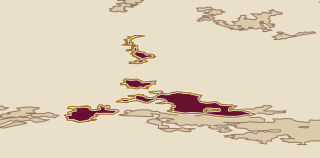
VPA’s range extends through the Rhône Valley, Languedoc and Mediterranean zones. The useful consequence is variety: a Grenache-led red such as Mr. Paul sits beside Syrah-led Quitus from Costières de Nîmes, while Chapitre appears in both red and rosé form. Appellation and grape therefore do more work than the cooperative name alone when choosing a bottle.
Laudun adds a newer Rhône reference point. It became the 18th cru des Côtes du Rhône in 2024, and VPA released Couchant, Levant and Domaine Allegret for that inaugural cru vintage. Those wines belong to Laudun’s new formal status; they should not be read as shorthand for the whole VPA range.
In the cellar
Vineyards and cellar
The cellar choices are clearest in the named reds. Chapitre Red spends a month on skins during maceration, a lengthy contact that corresponds with its smoky, savoury tannins, red fruit and spice. Grenache supplies the red-fruit core; Syrah adds darker spice and firmer grip, so the blend reads as a structured Rhône red rather than simple fruit.
Mr. Paul Red takes a gentler route with 100% Grenache: daily pump-overs provide extraction while keeping the stated rounded texture intact. Fresh pepper spice and cured-fruit coulis are the aromatic result, with softer tannin than the Syrah-heavy wines in the range. Quitus moves in the opposite direction: cap-punching and a 15-day hot maceration after fermentation build density in its 95% Syrah fruit, while bottling unfiltered keeps the wine’s dark-fruit weight and silky tannin profile intact.
Wines to know
The range in view
Chapitre is a useful branch point because the red and rosé are separate wines. Chapitre Red is 70% Grenache and 30% Syrah, with red fruit, spice, smoke and savoury tannin from its month-long maceration. Chapitre Rosé combines 40% Grenache, 40% Syrah and 20% Cinsault, offering a lighter-bodied alternative with acidity at the centre rather than the red’s tannin.
Mr. Paul Red narrows the focus to organic 100% Grenache, with pepper, cured fruit and a rounded palate. Préférence Rosé, from Costières de Nîmes, is 75% Grenache and 25% Syrah: it places Rhône red grapes in a dry rosé format. Quitus, also from Costières de Nîmes, is the darker end of the portfolio—95% Syrah and 5% Grenache, unfiltered, with more body, dark fruit and tannin.
A useful way in
A bottle to begin with
Start with Chapitre Red. It is a 70% Grenache, 30% Syrah Rhône blend whose month-long maceration puts VPA’s cellar work directly in the glass: red fruit and spice first, then smoke, savoury notes and tannin. It is dry, medium- to full-bodied in feel, and more structured than the Grenache-only Mr. Paul Red. The bottle also makes the range’s central contrast easy to grasp: Grenache provides fruit, while Syrah brings darker spice and grip.