
Why it matters
The producer
Vingård Hall is a small wine producer in Varberg, a coastal town in Hallands Län on Sweden's southwestern shore. Two wines carry the operation forward: Inger-Lena, a barrel-aged still white, and Cecilia, a sparkling wine. Both names are personal, and both wines reach buyers through Systembolaget, Sweden's state retail monopoly. No founding date or vineyard area has been publicly documented, which places the emphasis squarely on what is in the bottle.
The 2018 vintage of Inger-Lena Solaris Barrique drew the attention of wine writer Jack Jakobsson, who called it the best Swedish Solaris he had tasted. For a producer with no dedicated website and a small retail footprint, that single notice lodged the name in Swedish wine conversation at a moment when the country's critical language for its own wines was still forming.
Place and vineyards
Where the wines begin
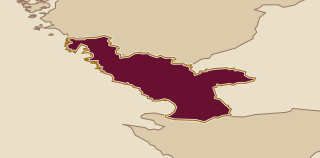
Hallands Län runs along the Kattegat coast between Gothenburg and the Öresund strait. The climate is cool and maritime, with a short but reliably bright growing season. Temperatures stay moderate through summer, and the proximity to the sea softens both spring frosts and autumn chill. Those conditions shaped the grape choice at Vingård Hall before any cellar decision could.
Varberg sits roughly in the middle of the county, facing west toward the sea. The coastal position brings relatively mild winters by Swedish standards, which matters for varieties that need adequate accumulated warmth to ripen. The wines reflect that geography directly: the still white builds on acidity and fruit concentration rather than alcohol weight, and the sparkling carries the brisk freshness that the latitude encourages.
In the cellar
Vineyards and cellar
Solaris was bred by Swiss viticulturalist Valentin Blattner and released in the 1990s. It crosses disease-resistant rootstock with early-ripening genetics, which gives it particular utility in northern Europe. In cool Swedish conditions, the variety produces high acidity and a fresh green fruitiness with herbal notes, including mint. Those qualities make it sharp and direct when handled without oak and more layered when barrel age is introduced.
At Vingård Hall, Solaris goes two routes. For Inger-Lena, the grapes are barrel-aged in barrique, which introduces the walnut, browned butter, and spice character that sit alongside the fruit in the glass. For Cecilia, the grapes are blended with 11% Muscaris, another PIWI cross with pronounced aromatic character and a floral, muscat-adjacent lift, then made into sparkling wine. The two approaches pull the same grape toward different ends: one textured and developed, the other bright and effervescent.
Wines to know
The range in view
Vingård Hall produces two wines, each named and each doing a distinct job with Solaris.
Inger-Lena is a still white, 100% Solaris, oak-aged in barrique. The current release is the 2024 vintage. The wine sits in the medium-bodied range for Swedish whites: not broad, not sharp, but layered in a way that the raw grape alone would not produce. The oak adds walnut richness and a buttery mid-palate that runs alongside yellow apple and pear fruit. Acidity stays present and fresh throughout. Spice and citrus come in at the edges. It is a wine with some deliberate weight to it, and that weight comes from the barrel work.
A useful way in
A bottle to begin with
Inger-Lena is the bottle that shows what Vingård Hall is doing with Solaris. It takes a high-acid, green-fruited variety and runs it through barrique, producing a still white with yellow apple and pear fruit, walnut and browned butter from the oak, fresh acidity through the mid-palate, and spice on the finish. The wine has yellow apple and pear fruit, walnut and browned butter notes, fresh acidity, and spice. Start with the current vintage and the Cecilia alongside it to hear the same grape in two different registers.