
Why it matters
The producer
Weingut Becker is a family estate at Außerhalb 12 in Spiesheim. Its bottles move from broad estate wines to Spiesheim village labels and named-vineyard wines, so a grape such as Riesling can be read at increasingly specific addresses rather than as a single house style. Sabrina Becker reorganized that structure after joining the estate in 2017, making the label hierarchy a practical guide to where the fruit comes from.
The present operation joined two family strands when the Spiesheim estate merged with Heike Becker’s family business in Albig in 2011. Six years later, Sabrina Becker joined the family winery and reorganized the wines into estate, village and single-vineyard levels. The result is a range built around origin, from introductory bottles through Spiesheim wines to labels carrying vineyard names.
Place and vineyards
Where the wines begin
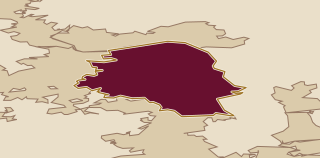
Spiesheim sits on the Spiesheim Plateau in Rheinhessen, between Mainz and Worms. That location is the common thread across Becker’s range: an estate wine gives a wider Rheinhessen expression, while a Spiesheim label narrows the origin to the village. A bottle marked Osterberg takes the address further, connecting Riesling to a named vineyard in Spiesheim rather than leaving place in the background.
Becker farms Spiesheimer Osterberg, Albiger Hundskopf, Schloss Hammerstein and Ensheimer Kachelberg. That named place gives the Riesling a more focused label than a general estate or village bottling.
In the cellar
Vineyards and cellar
The vineyard holdings spread across Spiesheim, Albig, Schloss Hammerstein and Ensheim through Osterberg, Hundskopf, Schloss Hammerstein and Kachelberg. Riesling sits alongside Grauburgunder, Weißburgunder, Chardonnay and Silvaner in the white-wine range, while Spätburgunder provides the red counterweight. This variety mix lets the estate show different grapes while keeping origin central on the label.
In the cellar, the clearest documented contrast is between Osterberg Riesling and the late-release Spiesheimer Spätburgunder. Osterberg’s stated fresh acidity and mineral finish keep the white wine’s shape direct. The Spätburgunder spent three years in barrique, so wood ageing becomes part of its frame and texture rather than a minor production note.
Wines to know
The range in view
Becker’s estate tier is the broadest starting point, followed by village wines labelled Spiesheim and then Lagenwein from named sites. The progression matters because it changes the question each bottle answers: the estate tier introduces the producer’s grapes, the village tier concentrates the origin around Spiesheim, and Osterberg identifies one vineyard within that village.
Osterberg Riesling is the clearest white-wine example. It belongs to the Lagenwein level and combines fresh acidity with a mineral finish, giving Riesling a dry, firm line through the palate. The Spiesheimer Spätburgunder works differently: it is a village-level red whose late-release version spent three years in barrique, bringing oak and extended élevage into the wine’s structure.
A useful way in
A bottle to begin with
Choose the Osterberg Riesling. It is a Lagenwein from a named Spiesheim vineyard, so the bottle brings together the estate’s hierarchy of origin and one of its principal grapes. Fresh acidity gives the palate a dry, energetic shape, and the mineral finish keeps the last impression focused. It comes first because it makes the progression from Rheinhessen to Spiesheim to Osterberg easy to taste and easy to read on the label.