
Why it matters
The producer
Weingut Bernhard Ott is a Grüner Veltliner specialist in Feuersbrunn am Wagram. With 95 percent of its vineyards planted to the grape, the estate can show how a single variety changes when it is drawn from different named sites, handled by hand, and raised in large oak rather than small barrels. Bernhard and Maria Ott now lead the fourth generation, while the estate’s connection with Hengstberg reaches back to 1889.
The labels bring place into focus through names such as Ried Spiegel. “Ried” identifies a named vineyard site; on Spiegel, that site is paired with Grüner Veltliner and the 1ÖTW Erste Lage designation. The result is a wine shaped as a vineyard expression rather than a generic regional bottling.
Place and vineyards
Where the wines begin
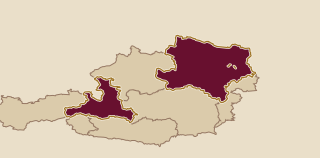
Ott works in Wagram and Kamptal, two Lower Austrian areas the estate describes as marked by deep loess. Grüner Veltliner is the thread between them: the grape remains constant while the site name on the label signals a more particular origin. That contrast is useful in a cellar dominated by one variety, because the range can turn attention from grape recognition to vineyard differences.
Feuersbrunn am Wagram is the home base, and Hengstberg is part of the estate’s historical landscape. The Wagram name on a Spiegel label places the wine in that local frame; the vineyard name then narrows the origin further, linking the bottle to a specific Ried rather than to Lower Austria as a whole.
In the cellar
Vineyards and cellar
Ott harvests by hand and works without artificial irrigation, alongside biodynamic preparations and compost made at the estate. Those practices concentrate attention on the fruit arriving from each parcel; hand sorting and picking can keep a named-site wine such as Spiegel connected to its vineyard before fermentation begins.
Fermentation starts spontaneously from the natural yeast population in the vineyard, and the cellar uses stems, grape mills and basket presses. The wine then rests on full lees in large Stockinger oak casks holding 5,000 to 10,000 litres; their oak is air-dried for up to 13 years. Large casks bring oak into the process without making overt wood flavour the main event, leaving room for Grüner’s citrus, herbal notes and mineral character.
Wines to know
The range in view
The range is built principally around Grüner Veltliner, with named vineyards including Ried Kirchthal, Ried Spiegel, Ried Stein and Ried Rosenberg. These names direct attention toward site while the grape supplies the common frame: expect the family resemblance of dry Grüner Veltliner—acidity, citrus fruit, herbal lift and texture—rather than a portfolio spread across unrelated grapes.
Ried Spiegel is identified as a 1ÖTW Erste Lage and as one of the estate’s three single-vineyard wines. The producer describes it as the liveliest and most slender member of that group, with meadow herbs, lemon balm, chamomile, lime zest and a dark-mineral note. Its structure is therefore not about broad body or sweet fruit, but about a leaner line of acidity, scent and mineral grip.
A useful way in
A bottle to begin with
Start with Grüner Veltliner Ried Spiegel 2020. It is 100 percent Grüner Veltliner from a named Wagram vineyard and an Erste Lage wine, so it brings the estate’s central grape, site focus and cellar approach into one bottle. Lime, tropical fruit, lemon balm and chamomile arrive first; fresh acidity and a tangy mineral finish keep the palate dry and active. It is a useful first encounter because Spiegel is described as the liveliest, most slender of Ott’s single-vineyard wines, making its herbal perfume and long grip easy to follow.