
Why it matters
The producer
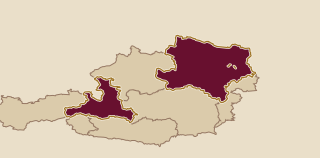
Weingut Familie Bauer works in Großriedenthal, a Wagram village in Lower Austria. Josef Bauer makes the wines with Eva Maria Bauer, and Grüner Veltliner and Roter Veltliner sit at the centre of the cellar. That focus matters because the range lets the same regional setting appear in several forms: a bright, practical Grüner in a litre bottle, site-labelled Wagram DAC wines, and sweet wines made from frozen grapes.
The estate is classified as organic and speaks of living, healthy soils in relation to nature and climate. In the glass, that concern meets a deliberately broad range rather than a single house style: Grüner can be fresh and lightly spicy, while Roter Veltliner can take on fuller fruit, spice and wood-derived notes.
Place and vineyards
Where the wines begin
Großriedenthal lies on Wagram’s upper ridge. On a label, Wagram names the regional wine area, Großriedenthal narrows the origin to the village, and names such as Ried Goldberg or Ried Hinterberg identify individual vineyard sites. A 2025 Grüner Veltliner labelled Wagram DAC Großriedenthal Ried Goldberg therefore carries grape, region, village and site in one line.
That stepped geography gives the Bauer range useful contrast. The Niederösterreich Grüner Veltliner is built for immediate, fruit-led drinking, while Goldberg and Hinterberg draw attention to particular sites and longer cellar handling. The result is a way to move from a broad regional wine to a more particular expression without losing sight of the grape.
In the cellar
Vineyards and cellar
For the 1-litre Niederösterreich Grüner Veltliner, fruit comes from vines aged 10 to 40 years. Ambient yeasts ferment the wine in stainless steel, then lees contact follows before release. Stainless steel keeps the fruit and light spice in view; lees ageing adds a little texture without turning the wine toward oak.
“Terrassen” follows a more layered route: hand harvest, vineyard sorting, spontaneous fermentation and extended ageing on lees without stirring. The named-site Roter Veltliner from Hinterberg takes another path, spending 11 months in large wooden barrel. That wood regime is reflected in the wine’s vanilla and cardamom notes, while the palate retains ripe fruit and spice.
Wines to know
The range in view
The range begins with the 1-litre Grüner Veltliner, a fresh, clean, lightly spicy and fruit-led white. It is the uncomplicated end of the portfolio, but its stainless-steel fermentation and lees ageing still give it a defined texture rather than simple fruit sweetness.
From there, Grüner Veltliner moves through Wagram wines such as “Terrassen” and into named sites, including the 2025 Ried Goldberg. Roter Veltliner provides a different white-wine register at Ried Hinterberg: the 2024 bottling combines vanilla, guava, melon and candied orange zest with medium body, ripe mango and a spicy finish.
A useful way in
A bottle to begin with
Choose the 2025 Grüner Veltliner Wagram DAC Großriedenthal Ried Goldberg. It is Grüner Veltliner from Wagram, narrowed to Großriedenthal and then to the Goldberg site, so the label makes the estate’s place-based structure easy to follow. In the glass it brings herbs, apple, cardamom, subtle tropical fruit and yellow stone fruit, then a mineral-driven palate with a long, extract-rich finish. It comes before the richer Roter Veltliner because it shows the house’s leading grape in a specifically named Wagram site.