
Why it matters
The producer
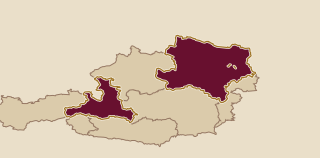
Fidesser is the official name used by a four-person family team in Platt, Lower Austria. The estate’s central wine decision is biodynamic cultivation: natural treatments and beneficial insects replace synthetic and systemic chemicals in the vineyards, while selective hand harvesting and low-intervention maturation carry the picked fruit into bottle with little cellar disguise.
The Fidesser story is current rather than archival. Sophie and Rudi work beside Gerda and Norbert at the family estate, where vineyard decisions are made within the same operation that harvests, processes and matures the wine. Biodynamic farming is not presented as a label ornament: it directs vineyard work away from synthetic and systemic chemicals, then meets selective hand harvesting when fruit is brought in.
Place and vineyards
Where the wines begin
Lower Austria is the regional address on these wines, while Fidesser names individual sites including Kapellenberg, Kirchleiten, Sandberg and Höhweingarten. The site name matters most clearly on Ried Kirchleiten 2019: “Ried” identifies the named vineyard on the label, separating this structured red from the more informal Orbis wines in the range.
The estate names Kapellenberg, Kirchleiten, Sandberg and Höhweingarten as vineyard sites, but the supplied record does not define their soils, slope directions or elevations. What is clear is the farming response: vines are tended through biodynamic cultivation, natural treatments and beneficial insects, with no synthetic or systemic chemicals used in the vineyard.
In the cellar
Vineyards and cellar
Natural treatments and beneficial insects are part of Fidesser’s biodynamic vineyard work, intended to manage the vines without synthetic or systemic chemicals. Selective hand harvesting follows that growing season, so fruit can be picked with sorting in mind rather than treated as an undifferentiated crop.
In the cellar, Fidesser describes gentle processing and low-intervention maturation. The effect is easiest to trace through the documented wines: the 2022 Pet Nat Rosé retains a light body and high acidity around citrus, red currant and cranberry, while Ried Kirchleiten 2019 gains broader fruit and savoury depth through maturation in large wood rather than an overt oak profile.
Wines to know
The range in view
The named range includes Orbis Pet Nat Rosé 2022, Orbis Natural Wine Red and Ried Kirchleiten 2019. The Orbis wines sit on the freer, immediately drinkable side of the estate’s offering: the rosé is citrusy, fresh and light, with red-currant and cranberry fruit; an independent listing also records sensory and maturation details for Orbis Natural Wine Red, though its vintage is not clearly displayed.
Ried Kirchleiten 2019 takes a different route. It is a blend matured in large wood, with ripe sour cherry, cassis, plum, red berries and herbal savouriness. Falstaff awarded it 90 points in a tasting dated 24 June 2024; more usefully for the glass, the review describes fresh structure, fruit weight and a mineral finish rather than a merely sweet-fruited red.
A useful way in
A bottle to begin with
Begin with Orbis Pet Nat Rosé 2022. It shows Fidesser’s low-intervention approach in a direct form: high acidity, citrus, red currant and cranberry, with a fresh, light body. The wine does not require a catalogue of vineyard theory before it becomes legible; its brisk fruit and dry-feeling finish make the estate’s emphasis on carefully handled fruit easy to taste.