
Why it matters
The producer
Georg Weinwurm leads a family winery whose range runs from litre bottles and sparkling wine to varietal bottlings, reds, rosé and field blends. That breadth follows the vineyard: the estate grows more than ten grape varieties, including grapes it describes as rare. In the glass, this means Grüner Veltliner is part of the picture, not the whole one; pear, pepper and citrus can arrive alongside red-wine material from Blauer Zweigelt and other varieties.
The estate’s present shape comes from a family business expanding across different colours and grape varieties rather than narrowing itself to one local calling card. Georg now works as the third-generation winemaker with Lisa and other family members, and the 28-hectare holding supports a range divided into FUNdament, SortenREICH and Hommage, alongside sparkling wines and litre bottles. Those labels organise a varied cellar: approachable estate wines in one direction, varietal and broader grape expressions in another, with Gemischter Satz showing how several grapes can meet in one bottle.
Place and vineyards
Where the wines begin
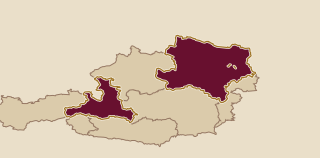
Dobermannsdorf sits in the northeastern Weinviertel of Lower Austria, a Pannonian-influenced setting. Warmth supports ripe pear, white peach and melon notes in the estate’s white wines, while the 2025 Gemischter Satz still carries lime, green apple and fresh acidity. Weinviertel is the regional address; Dobermannsdorf is the village that locates both the winery and the Schilling site named on Schmatz Gemischter Satz.
Ried Schilling in Dobermannsdorf is the named site behind Schmatz Gemischter Satz. Its importance here is practical: the varieties for this wine are treated as a field blend, so their fruit is brought together before a cellar blend could smooth away their separate characters. The result is a dry, unoaked white where floral notes and fresh fruit stay connected to a shared harvest.
In the cellar
Vineyards and cellar
The family describes its cultivation as work in harmony with nature and with respect for the site. That broad approach becomes most tangible in its Gemischter Satz wines. Instead of presenting one grape after another, Schmatz brings the vineyard’s varieties together as a combined expression, then remains dry and unoaked. Without oak sweetness or toast in the way, the wine’s fruit, floral lift and acidity stay in the foreground. The 2025 Swedish Gemischter Satz is likewise dry and unoaked, letting Grüner Veltliner, Welschriesling, Pinot Blanc and Muskateller contribute their own aromas and shape.
Wines to know
The range in view
FUNdament, SortenREICH and Hommage are range names, not a ladder of vineyard classifications. Together with sparkling wines and litre bottles, they show an estate working across everyday and more individual bottlings, reds and whites. The most revealing white style is Gemischter Satz, where the grape mix changes by vintage and should be read as a wine of that specific year.
For 2025, the Weinwurm Gemischter Satz sold in Sweden combines Grüner Veltliner, Welschriesling, Pinot Blanc and Muskateller; percentages are not disclosed. Its dry, unoaked frame carries pear and green apple fruit, white flowers, lime and white pepper. Schmatz Gemischter Satz Ried Schilling offers a second version of the idea: a dry field blend with fresh fruit, floral character and a lifted finish. The red side of the estate has an older family thread through Blauer Zweigelt.
A useful way in
A bottle to begin with
Choose the 2025 Weinwurm Gemischter Satz, Systembolaget product number 23153. It puts the estate’s mixed-variety work in a single dry, unoaked white: Grüner Veltliner, Welschriesling, Pinot Blanc and Muskateller share the bottle, bringing pear, gooseberry, white flowers, green apple, lime and white pepper. Its light body and fresh acidity make the wine easy to read without losing detail. It also shows why the Weinwurm range cannot be reduced to one grape: the character comes from several varieties meeting in the vineyard and remaining distinct enough to register in the glass.