
Why it matters
The producer
Isegrim makes around 70,000 bottles a year, from an estate associated with Ungstein and named sites including Bettelhaus. The Wolf family’s wines move from everyday House bottlings through Village and Site labels to Dance wines, while Riesling Herrenberg, Auxerrois and Riesling Sekt Brut Nature show that still white wine and sparkling wine are both central to the cellar.
Mira Wolf’s third-generation role links family continuity to formal viticultural study. That combination is most visible in the way the estate treats its Riesling and Auxerrois as products of living vineyard rows before they become labelled wines.
Place and vineyards
Where the wines begin
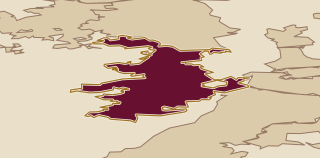
Ungstein lies within Bad Dürkheim, in Pfalz’s Mittelhaardt/Deutsche Weinstraße area. On an Isegrim label, that place sits behind wines such as Ungstein Auxerrois Kabinett trocken: the village name narrows the wine’s origin beyond the broad Pfalz region and connects the bottle to the estate’s home ground.
Riesling Herrenberg adds a named vineyard reference to the range. It places a site name beside the grape, while the broader House, Village, Site and Dance structure lets Isegrim organise wines by more than variety alone.
In the cellar
Vineyards and cellar
Permanent green cover runs between Isegrim’s vines as conditions fluctuate through the season. Sheep graze this cover and fertilise the ground, while plant and mineral preparations are used for vineyard protection; the practical result is that Riesling and Auxerrois are grown in rows managed as a planted system rather than bare soil between trunks.
In the cellar, the documented move away from cultured yeast and technical corrections keeps fermentation close to the harvested fruit. That does not promise one fixed flavour, but it means the dry Riesling, Auxerrois and sparkling base wines begin without a cultured-yeast recipe imposed across the range.
Wines to know
The range in view
House, Village, Site and Dance wines provide Isegrim’s visible range structure. The names are useful because they place different bottles beside one another without pretending that Riesling, Auxerrois and sparkling wine perform the same job in the glass.
Riesling Herrenberg is the site-named Riesling in the documented current offer. It is the bottle for following a Riesling grape through a named vineyard reference, with dry white-wine structure and acidity at the centre of the style rather than mousse or residual sweetness.
A useful way in
A bottle to begin with
Begin with Riesling Sekt Brut Nature. It is Isegrim Riesling made as bottle-fermented sparkling wine, then aged on lees, so it brings the estate’s grape work and cellar method into one dry glass. Look for firm acidity, fine mousse, citrus fruit and a lees-shaped texture through the finish. It also makes the difference between a grape wine and a method wine immediately physical: Riesling’s fruit is present, but the bottle fermentation changes its body and movement across the palate.