
Why it matters
The producer
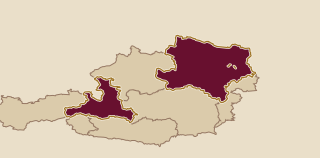
Weingut Josef Jamek stands at Josef Jamek Straße 45 in Joching, a Wachau village on the Danube in Lower Austria. Founded in 1912, the family estate now has Julia and Herwig Jamek at its helm. Its 25 hectares are planted principally to Grüner Veltliner and Riesling, a pairing that makes the range legible: Grüner Veltliner brings one route through the terraces, Riesling another, and named Ried bottlings narrow the view to individual sites.
The estate’s long arc runs from its 1912 foundation to Julia and Herwig Jamek taking on the family tradition in 2012. Between those points sits Josef Jamek’s decision to bottle a vineyard Riesling from Ried Klaus dry in 1959, at a time when enrichment of the must was common. It established a concrete pattern for the house: a named vineyard, one grape and a wine whose shape comes from ripe harvested fruit rather than adjustment in the cellar. The current generation works with the same core grapes on the same demanding terraces.
Place and vineyards
Where the wines begin
The Wachau setting is not a backdrop to Jamek’s labels. Its vineyards rise on extremely steep terraces above the Danube, so each harvest has to be brought in by hand under the Vinea Wachau code. On bottles such as Ried Pichl Riesling Federspiel and Ried Steinwand Grüner Veltliner Federspiel, the vineyard name identifies the site while Federspiel places the wine within the Wachau system. That combination moves attention from a broad regional name to grape, slope and a particular bottling.
In the cellar
Vineyards and cellar
Jamek states that it is sustainability-certified, and its Vinea Wachau commitments require exclusive hand harvesting and minimally interventionist wine production. Hand-picked fruit matters on steep terraces because selection happens before grapes leave the vineyard; minimal handling then leaves room for acidity and fruit to remain clear in the glass. The 2024 Ried Steinwand Grüner Veltliner Federspiel spent four months in steel, a practical detail that keeps oak out of the picture and directs attention to the grape’s fruit, dry palate and acidity.
Wines to know
The range in view
The range is built around Grüner Veltliner and Riesling, with named Ried wines bringing individual vineyards into focus. Ried Pichl Riesling Federspiel is the Riesling reference: the producer identifies peach aroma, while the tasting record adds fruit, fresh acidity, a slight sweet impression and a defined finish. It is a dry Wachau wine whose energy comes from acidity rather than oak character.
Ried Steinwand Grüner Veltliner Federspiel provides the Grüner Veltliner counterpoint. Its four months in steel suggest a direct, unvarnished presentation, with fruit and acidity carrying the wine rather than wood. The 2023 Jochinger Riesling widens the picture beyond the Ried labels: its reported aroma, citrus, mineral character and finish show how Riesling can travel from fruit into a more stony, mouthwatering close.
A useful way in
A bottle to begin with
Choose the 2024 Ried Pichl Riesling Federspiel. It puts Jamek’s central grape, a named Wachau vineyard and the Federspiel designation in one bottle, while its peach aroma gives an immediate starting point. Fresh acidity draws the fruit across the palate; the reported touch of sweetness softens the middle without turning the wine sweet, and the finish brings the line back into focus. It is the most useful first encounter because it connects a specific Ried to the estate’s dry Riesling work on steep primary-rock terraces.