
Why it matters
The producer
Kolkman is rooted in Fels am Wagram, where four generations live and work at the estate. Falstaff names Horst, Gerhard and Horst Jr. Kolkmann as winegrowers; wein.plus lists Daniel Hofstetter as winemaker. That family continuity reaches the bottle most clearly through Rosé Fruchtspiel, whose short, measured contact with Zweigelt skins turns a red grape into a pale, dry rosé rather than a deeply coloured red wine.
The estate began in 1964 with a jointly purchased parcel of under 1,500 square metres and four Chardonnay rows Marianne brought as dowry. A wine estate of 60 hectares, as reported by Falstaff for 2026/27, is therefore not an abstract number: it is the larger vineyard base behind a family business that began with a small plot and a few vines.
Place and vineyards
Where the wines begin
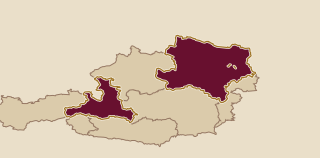
Fels am Wagram is Kolkman’s named home in Lower Austria, and the estate’s wines are grown and made there. The place supplies the practical setting for the rosé: Zweigelt is harvested from the family’s vineyards, then handled in the cellar to retain a pale onion-skin colour and a light, dry shape instead of becoming a red wine.
Fels am Wagram also holds the estate’s tasting facility, opened in 2012. Wine can be encountered where it is made, with the family’s long vineyard history set beside the current rosé’s fresh fruit, mineral notes and lingering finish.
In the cellar
Vineyards and cellar
The rosé begins with Zweigelt and approximately two to four hours of skin contact before pressing. That brief interval draws enough pigment for its onion-skin hue and enough phenolic material for light tannin, while avoiding the deeper colour and firmer grip expected from a red-wine fermentation on skins.
Fermentation and ageing in stainless steel keep oak outside the picture. The consequence is a rosé described through red fruit, mineral notes, acidity and moderate body: fruit stays exposed, the palate remains dry, and the finish carries on without barrel spice or woody weight.
Wines to know
The range in view
Kolkman’s documented wine story runs from Chardonnay in the estate’s 1964 foundation to the current Zweigelt Rosé Fruchtspiel. Chardonnay belongs to the family’s beginning; the rosé is the named bottle with enough detail to show the estate’s contemporary work. Its short skin contact and stainless-steel élevage create a wine with pale colour, red-fruit aroma, lively acidity and light tannin.
Rosé Fruchtspiel is not built as a sweet, soft rosé. The supplied tasting descriptions point instead to dry fruit, mineral notes, moderate body and a lingering finish. Zweigelt supplies the red-fruit register and a small amount of grip; the cellar method keeps the wine bright and lightly framed.
A useful way in
A bottle to begin with
Start with Kolkman Rosé Fruchtspiel. It is a Zweigelt rosé from Fels am Wagram, made with two to four hours of skin contact before pressing and then fermented and aged in stainless steel. The method is visible in the glass: pale onion-skin colour, red fruit, mineral notes, lively acidity, light tannin and moderate body.