
Why it matters
The producer
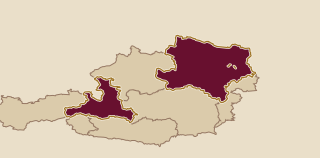
Weingut Loimer is based at Haindorfer Vögerlweg 23 in Langenlois, a Kamptal town in Lower Austria. Fred Loimer took over from his father in 1998, and Grüner Veltliner and Riesling remain the estate’s principal grapes. Kamptal on the label points to the regional home of the range; a named vineyard such as Käferberg or Seeberg narrows the address to a particular site within that landscape.
The cellar’s reach is wider than Langenlois alone. In 2004, Loimer leased Weingut Schellmann in Gumpoldskirchen, bringing Thermenregion fruit into the estate alongside its Kamptal work. The result is not one undifferentiated regional style: the labels separate regional wines, Langenloiser wines and named-site bottlings so grape and origin can be read together.
Place and vineyards
Where the wines begin
Kamptal combines hot days with cool nights. For Grüner Veltliner and Riesling, that daily swing supports ripe fruit while retaining acidity, so the wines can carry stone fruit and citrus without losing a dry, lively line through the palate.
Langenlois is Loimer’s working base, while Gumpoldskirchen is an additional source of grapes in the Thermenregion. This distinction matters in the glass and on the label: a Kamptal Grüner Veltliner speaks from the estate’s central region, whereas the Gumpoldskirchen lease adds another Lower Austrian growing area rather than moving the winery’s home.
In the cellar
Vineyards and cellar
Gentle pruning and selective hand harvesting put the first sorting decisions in the vineyard. Picking fruit selectively can keep damaged or unripe bunches out of the fermenter, helping Grüner Veltliner retain clean fruit and Riesling hold its acidity without relying on heavy cellar correction.
Loimer makes compost from vine and tree prunings, grape marc and animal dung. Fermentation is spontaneous, driven by yeasts naturally present around the grapes and cellar. Stainless steel preserves a direct fruit profile and taut acidity; wooden barrels offer another route for maturation. In the estate’s natural-wine work, native yeasts, extended skin contact and ageing without additives or intervention can bring more phenolic grip, savoury notes and texture.
Wines to know
The range in view
The range begins with Kamptal Grüner Veltliner and Kamptal Riesling, then moves to Langenloiser bottlings and named-site wines. Grüner Veltliner appears under Seeberg and Käferberg, while Loiserberg, Steinmassl, Heiligenstein and Berg Vogelsang are among the estate’s named Kamptal vineyards. Regional labels offer the broader climate and geology of Kamptal; a vineyard label makes the site part of the wine’s address.
Sparkling wine has been part of Loimer’s work since 2013, creating a separate category beside the still Grüner Veltliner and Riesling range. Across the still wines, the central contrast is between citrus-led acidity, stone-fruit weight, chalky or mineral texture, and the extra grip that can come from a named place or longer skin contact.
A useful way in
A bottle to begin with
Start with Loimer Kamptal Grüner Veltliner 2025. It is varietal Grüner Veltliner classified as Kamptal DAC, so bottle, grape and regional appellation are all plainly stated. Native-yeast fermentation and stainless-steel ageing keep the wine focused on nectarine, lime zest and white pepper rather than oak flavour.