
Why it matters
The producer
Gabriel and Simon Scheuermann are both the owners and winemakers at the family estate on Hauptstrasse 115 in Niederkirchen. Their work joins vineyard changes with a cellar that allows fermentation to run dry and wines to rest on lees in wood, so Chardonnay can carry ripe fruit without finishing sweet or soft.
Ecological cultivation began at Scheuermann in 2012, followed by work to introduce biodynamic principles. The vineyard change runs beside a cellar practice of limited intervention, spontaneous fermentation and lower sulphur use: fruit is given time to ferment and settle, and the resulting wines are intended to reach the bottle dry, with lees-grown texture rather than sweetness doing the broadening.
Place and vineyards
Where the wines begin
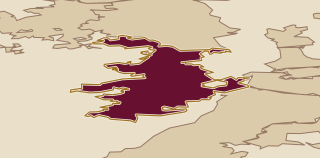
Niederkirchen sits in Pfalz’s Mittelhaardt/Deutsche Weinstraße appellation, while Bunter Sandstein Chardonnay is labelled as a Deidesheim Ortswein. Ortswein means village-level origin: this is Chardonnay drawn from Deidesheim vineyards rather than a single named parcel, and its label places the wine in that local frame before the cellar’s barriques add their own flavour and texture.
The estate’s vineyards include limestone, loess and sand. Those materials are not assigned to a named Chardonnay parcel, but they form the ground beneath a wine whose tasting notes include a mineral base and stony notes; in Bunter Sandstein, that earthier line sits alongside yellow fruit and barrel-derived vanilla rather than being buried by them.
In the cellar
Vineyards and cellar
Spontaneous fermentation means the brothers do not begin each fermentation with a selected commercial yeast. They let fermentation continue until dry, then use long fermentation and ageing on lees in wood to build stability before bottling. Lees contact can bring breadth and a lightly nutty feel; wood ageing can add spice and shape. In the 2025 Bunter Sandstein Chardonnay, the approach is especially explicit: whole clusters are pressed, fermentation is spontaneous, and the wine spends all its maturation in barriques.
Half of those barriques are new for the 2025 Chardonnay, so vanilla, nuts and fine spice are part of the bottle’s design rather than incidental perfume. The wine’s integrated acidity and mineral foundation keep that oak from turning the finish syrupy, while the dry fermentation leaves the fruit tasting ripe rather than sugary.
Wines to know
The range in view
The documented range anchor is Bunter Sandstein Chardonnay, a Deidesheim Ortswein. It is a village Chardonnay built from whole-cluster pressing, spontaneous fermentation and complete barrique ageing, with 50 percent new wood in the 2025 vintage. That method gives the wine a clear structural shape: ripe nectarine, mirabelle and quince meet oak-derived vanilla and nut notes, then move through a juicy, dry palate with acidity and mineral weight.
Across the wines, Scheuermann describes long lees ageing in wood and fermentation to dryness. That points toward bottles with texture, dry finishes and savoury development from time in cellar, rather than an assortment defined here by confirmed grape names or vineyard ranks. Bunter Sandstein is the named example where those choices can be followed all the way from Deidesheim origin to the finished glass.
A useful way in
A bottle to begin with
Start with Bunter Sandstein Chardonnay. It is the estate’s most fully documented bottle: a Deidesheim Ortswein made from whole clusters, fermented spontaneously and raised entirely in barriques, half new in 2025. Expect ripe yellow fruit, vanilla, nuts, fine spice and a mineral line, with medium body, dry texture and acidity that stays present through the finish. It puts Pfalz Chardonnay, village origin and Scheuermann’s wood-and-lees cellar work in one bottle.