
Why it matters
The producer
Schloss Schönberg works from Zwischen den Bächen 23–25 in Bensheim, a town on the Hessische Bergstraße. Meissner joined the team in 2018 after posts at Weingut am Nil and Weingut J. Neus; his work in the cellar sits alongside Trautmann’s vineyard role. That division matters in a range whose wines are made parcel by parcel, so a named soil or vineyard can remain present from harvest through fermentation and wood ageing.
The estate is described as comparatively young, but its grapes follow two tracks. Burgundy varieties, especially Spätburgunder, supply red fruit, tannin and body; Riesling and Silvaner keep dry white wines in the picture. Rather than treating those grapes as separate brands, Schloss Schönberg uses them to show several faces of the same small region.
Place and vineyards
Where the wines begin
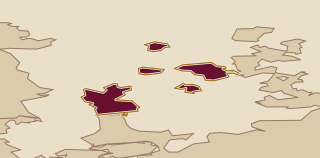
Hessische Bergstraße is Germany’s smallest wine region, and Riesling is its dominant grape. Schloss Schönberg sits in Bensheim within that dry-wine landscape, yet its range extends into the Pinot family as well as Silvaner. The result is not a Riesling-only cellar: dry white wines can carry citrus, acidity and texture, while Spätburgunder gives the estate a red-wine language of cherry fruit, spice and grip.
Its vineyards include sites around Auerbach, Bensheim and Schönberg, with names such as Auerbacher Fürstenlager, Auerbacher Höllberg, Zwingenberger Alte Burg, Bensheimer Hemsberg and Schönberger Herrnwingert. Together they form a dispersed holding rather than a fixed hierarchy. For the bottle drinker, the useful clue is on the label: vom Granit points directly toward the ground named by the wine.
In the cellar
Vineyards and cellar
Schloss Schönberg describes nature-oriented vineyard work, avoiding herbicides and promoting biodiversity. That farming approach is paired with hand harvesting, which lets fruit arrive in small, selected lots rather than as a mechanically picked mass. Parcel-by-parcel vinification then keeps those lots separate, a useful method when granite, loess and vineyard position are meant to register in dry wines.
Spontaneous fermentation and maturation in wooden vessels are part of the estate’s cellar approach. For the 2022 Spätburgunder vom Granit, the detail is sharper still: natural yeasts, 70% whole-cluster pressing and used wood. Whole clusters can bring spice and a firmer outline to Pinot Noir; used wood supports texture without making overt oak the dominant aroma. The 2022 wine is taut and slender with cassis, cherry and a cool, reductive edge.
Wines to know
The range in view
The range is built around Burgundy varieties, Riesling and Silvaner rather than one single grape. Spätburgunder provides the strongest red reference, while Pinot Gris and Pinot Blanc bring fuller white-wine texture alongside Riesling’s acidity and citrus-driven dry style. Silvaner adds another white grape suited to a more savoury shape and measured fruit weight.
Named sites broaden that range beyond a generic regional blend. Wines connected with Fürstenlager, Höllberg, Alte Burg, Hemsberg and Herrnwingert place vineyard names beside grape varieties, while Schönberg Spätburgunder vom Granit uses soil as the label’s main signal. Across those bottlings, the estate’s language is dry wine, fruit harvested by hand, fermentation with natural yeasts and wood used to build texture rather than sweetness.
A useful way in
A bottle to begin with
Choose Schönberg Spätburgunder vom Granit 2022. It is dry, 100% Spätburgunder, and its label links the grape to granite without requiring a tour through the whole range. Early hand harvesting and natural-yeast fermentation keep the fruit vivid; 70% whole clusters and used wood supply spice, tannin and texture. Expect cassis and cherry first, then a cool, slender palate and a savoury dry finish. It puts vineyard, cellar and regional Pinot Noir work in one glass.