
Why it matters
The producer
Wilfried and Verena Weinbach run the estate with Christoph and Christina Weinbach, with two generations involved in decisions about how the wines are made and developed. Wilfried has transferred responsibility to Christoph but remains active, so the Philipp Spätburgunder comes from a cellar and vineyard programme shared across the family rather than a clean break between generations.
Christoph studied viticulture in Geisenheim and is responsible for vineyard care as well as cellar élevage. That combined role links the estate’s aim of picking healthy, fully ripe grapes to gentle processing and slow, controlled fermentation once the Spätburgunder reaches the cellar.
Place and vineyards
Where the wines begin
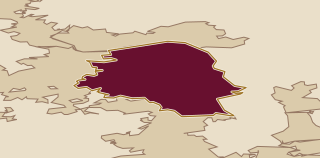
The winery is at Wormser Straße 41 in Ober-Flörsheim, among the hills of southern Rheinhessen. The producer calls this one of Germany’s warmest and driest regions, conditions that support its stated focus on ripeness; this is the regional frame behind a dry Pinot Noir that can carry barrique without being presented as sweet or fortified.
Hillesheimer Sonnheil gives the Philipp wine a more exact address within that wider setting. The bottle is drawn from the vineyard’s best south-facing part, narrowing a Rheinhessen red from region and village country to a named site and a defined exposure.
In the cellar
Vineyards and cellar
Weinbach describes intensive vineyard work aimed at harvesting healthy, fully ripe grapes. For its dry Spätburgunder, that harvest goal matters because ripe Pinot Noir fruit supplies the material before barrel ageing adds its own influence; fruit picked in sound condition can be handled gently rather than forced through aggressive processing.
In the cellar, the estate uses gentle grape processing and slow, controlled fermentation. Those choices are designed to preserve fruit through fermentation and to build the red’s texture gradually, while the Philipp Spätburgunder then spends more than one year in barrique on the current 2022 product page. The barrel is therefore part of the wine’s construction, bringing oak into a dry Pinot Noir framework rather than covering an unspecified blend.
Wines to know
The range in view
The documented range is anchored by family-named wines and named sites. Philipp Spätburgunder trocken is a dry, single-site wine from the best south-facing part of Hillesheimer Sonnheil, made from Spätburgunder and matured in barrique. Its structure comes from the meeting of ripe red-wine fruit, dry fermentation and oak ageing, with the site named directly on the wine’s story.
A Swedish listing also records a 2018 Spätburgunder R Hillesheimer Sonnheil made entirely from Pinot Noir, the German name for Spätburgunder. That confirms Hillesheimer Sonnheil as more than a passing reference: the vineyard appears with a dry family wine and with a varietal Pinot Noir bottling tied to the same site.
A useful way in
A bottle to begin with
Start with the 2022 Philipp Spätburgunder trocken. It is a dry, single-site Spätburgunder from the best south-facing part of Hillesheimer Sonnheil, matured in barrique for more than one year. That puts grape, vineyard exposure, family naming and cellar method in one bottle.