
Why it matters
The producer
Weingut Weszeli works from Großer Buriweg 16 in Langenlois, making Grüner Veltliner and Riesling from Kamptal vineyards. Davis Weszeli took over a vineyard outside the town in 2011, and Thomas Ganser joined as winemaker in 2015. The result is a 30-hectare estate where Grüner can move from citrus-led refreshment toward broader, lees-shaped texture, while Riesling remains part of the Kamptal range.
Grape growing and winemaking at the estate are traced to 1679. Weszeli calls its present approach Terrafactum: wine formed through the ground under the vines, biodynamic work and an unhurried cellar. That connection is most tangible in Grüner Veltliner, whose dry acidity and peppery, savoury potential can carry both site character and extended ageing.
Place and vineyards
Where the wines begin
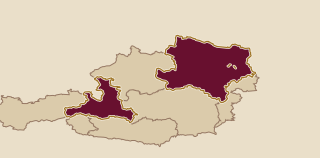
Langenlois sits in Kamptal, a Lower Austrian wine area where Pannonian and Alpine climate influences meet. Grüner Veltliner and Riesling both benefit from ripening conditions that can build fruit while retaining acidity, so bottles from the area can feel dry and energetic rather than simply ripe.
Kamptal is the regional name on the broader address; Langenlois narrows the wine’s origin to the town and surrounding vineyards. In Weszeli’s range, that relationship appears in the Terrafactum Langenlois Grüner Veltliner: a wine tied to a cluster of local parcels rather than a single named site.
In the cellar
Vineyards and cellar
Weszeli’s 30 hectares are cultivated with biodynamic principles, including natural preparations and hand work in the vineyards. The cellar continues that low-intervention sequence with indigenous-yeast fermentation, lees ageing and maturation in large wooden vessels. Lees contact can build body and a faint savoury note, while large wood allows maturation without turning the wine into an overtly oaky Grüner.
The estate keeps its top-cru wines in large wood for more than two years, longer than the shorter cellar ageing often preferred locally. Time in those vessels moves the wines away from simple youthful fruit: dried-herb, savoury and tertiary notes can emerge, and the texture gains weight before release. The delay matters because Grüner’s acidity and Riesling’s citrus-led structure have room to settle into a more layered finish.
Wines to know
The range in view
Grüner Veltliner and Riesling form the estate’s main range. Grüner is the clearest thread in the named bottles: Caractère Grüner Veltliner and Terrafactum Langenlois Grüner Veltliner. The first is a distinct cuvée with its own vineyard and élevage details; the second gathers Langenlois fruit, making its dry acidity and lees-derived texture part of a broader local expression.
Caractère 2023 is described by the estate through its vineyard composition, vinification, élevage, texture and acidity. A separate current 2024 release has its own documented vineyard sources and production details, so the two should be treated as related wines rather than interchangeable vintages. Terrafactum Langenlois 2023 is entirely Grüner Veltliner; the current 2024 release is described as fruit from 60 parcels, aged five months on lees.
A useful way in
A bottle to begin with
Start with Weszeli Caractère Grüner Veltliner 2023. It is a Grüner Veltliner whose producer description directly connects vineyard composition, vinification, élevage, texture and acidity. The wine is dry and structured around fresh acidity, but it is not designed as a light, quickly made white: the cellar work adds weight and texture alongside the fruit.