
Why it matters
The producer
Founded in 1877 by Sir Alexander Williams and Arthur Humbert, Williams & Humbert is now owned by the Medina family. From Jerez, it makes sherry across dry, medium and sweet styles, while Alegría carries the Manzanilla-Sanlúcar de Barrameda appellation. The range reaches more than 70 countries, but its wine logic remains rooted in ageing: Palomino under flor for dry Manzanilla, then longer oxidative paths for darker, nuttier sherries.
The bodega participated in the early institutional history that led to Jerez’s regulatory system. That connection is visible in the bottles: a Manzanilla label names a protected style shaped by biological ageing, while Dry Sack Medium brings together older sherry components and Pedro Ximénez sweetness in a separate, medium-sweet register.
Place and vineyards
Where the wines begin
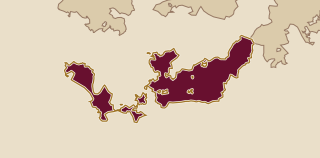
Jerez lies in Andalusia, where Williams & Humbert’s cellar work turns the same broad sherry vocabulary into markedly different wines. Alegría comes from the Manzanilla-Sanlúcar de Barrameda appellation, a designation associated with biological ageing beneath flor, the yeast layer that protects the wine from oxygen. Palomino stays pale, dry and saline as a result.
Dry Sack Medium belongs to Jerez’s blended sherry tradition rather than that lean Manzanilla line. Its Amontillado and Oloroso components have travelled through biological and oxidative ageing, so the glass moves away from green apple and almond toward dried fruit, hazelnut and brown sugar.
In the cellar
Vineyards and cellar
Añina and Carrascal grapes are vinified separately, then considered for blending. That first division gives the cellar more control over fruit, acidity and body before the lots enter their final wine. It is especially useful in sherry, where the blend must carry a consistent style while ageing changes aroma, colour and texture.
Alegría’s Palomino matures biologically under flor in a solera with six criaderas, or ageing tiers. Flor keeps oxygen away from the wine, holding the palate dry and savoury. Dry Sack Medium takes a different route: Amontillado and Oloroso components bring biological and oxidative ageing together, Pedro Ximénez contributes sweetness, and the solera ageing is reported at six years. Oxidation builds amber colour, nut flavour and broader texture; the added sweet component rounds the finish.
Wines to know
The range in view
The range begins with Alegría Manzanilla, a dry Palomino wine whose flor ageing keeps acidity bright and the body light. Its six-criadera solera is relatively compact, and the wine sits at the pale, saline end of the house’s sherry spectrum.
Dry Sack divides into medium and cream styles. Dry Sack Medium is built from Amontillado and Oloroso with Pedro Ximénez, so it has more sweetness and weight than Alegría, with dried-fruit and hazelnut character rather than a purely fresh, yeasty profile. Don Zoilo Oloroso, Amontillado and Pedro Ximénez move further into oxidative or sweet territory, while the Collection bottlings and Sala de Añadas wines extend the ageing story. Gran Duque de Alba brandy sits alongside the sherries as the house’s aged spirit.
A useful way in
A bottle to begin with
Choose Dry Sack Medium. It is a medium-sweet sherry built from Amontillado and Oloroso components, with Pedro Ximénez adding sweetness after about six years in solera. Dried apricot, bitter orange, brown sugar and hazelnut make its oxidative ageing easy to taste, while the medium body and sweet finish keep it distinct from both dry Manzanilla and denser Pedro Ximénez.